
Youth Month is a time to honour the courage, creativity and potential of South Africa’s young people. It is also a moment that should make us uncomfortable. We cannot celebrate youth meaningfully while millions of young people remain excluded from education, employment and training pathways that could unlock their future.
The scale of the challenge is stark. In the first quarter of 2026, Stats SA reported that approximately 3.9 million young people aged 15 to 24 were not in employment, education or training. This represents 37.6% of that age group. For the broader 15 to 34 age group, the NEET rate was even higher at 45.6% (Statistics South Africa, 2026). These figures are more than labour-market statistics. They represent young people whose potential is being delayed, redirected or lost because the pathway between school and meaningful economic participation is too weak.
Yet it would be a mistake to describe South African youth only through the lens of unemployment. Across the country, young people are already finding new ways to solve problems. They are building small businesses, joining innovation challenges, learning digital skills, using online platforms to access markets, and creating community-based responses to social and environmental issues.
UNDP South Africa’s work on youth digital inclusion, for example, points to growing momentum around digital training, youth entrepreneurship and participation in the digital economy (UNDP South Africa, 2024). The Youth Innovation Challenge similarly reflects a shift towards supporting young people to develop practical, technology-enabled solutions to real-world problems in areas such as food security, health, social development and environmental sustainability (Youth Agency for Entrepreneurial Innovation, 2025).
This is the opportunity we should be building on during Youth Month. Talent is equally distributed in South Africa, however, access to opportunity is not. Young people are not short of talent. They are short of access to opportunities to use their talent. Too many only encounter structured opportunities once they are already at risk of exclusion. If we want different youth outcomes, we must stop waiting until young people are unemployed before investing in them.
Young people are not short of talent. They are short of access to opportunities to use their talent.
This is where STEM education becomes essential. Science, technology, engineering and mathematics are often spoken about as subjects for future scientists, engineers or software developers. That view is too narrow. STEM education, when done well, develops the habits of mind that all young people need in a changing world: curiosity, problem-solving, logical reasoning, creativity, collaboration and resilience.
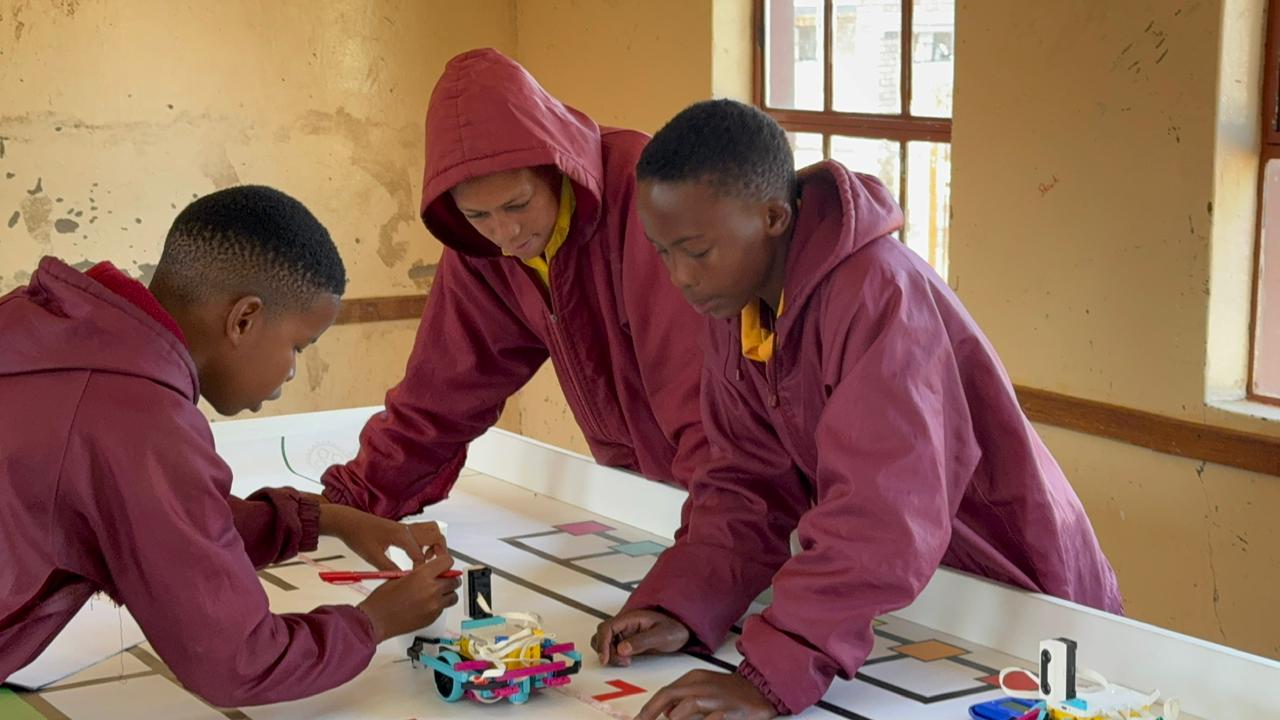
Coding and Robotics is a practical example. Its value is not only that learners write code or build robots. Its deeper value is that learners learn how to think through a problem. They learn to break a challenge into smaller parts, test an idea, fail safely, adjust, and try again. These are not only technical skills. They are life and work skills.

This matters because the future of work is changing rapidly. The World Economic Forum’s Future of Jobs Report 2025 highlights the growing importance of technological literacy, analytical thinking, resilience, flexibility and lifelong learning as employers adapt to artificial intelligence and other major shifts in the economy (World Economic Forum, 2025). A recent World Bank study on online job vacancies in South Africa, Nigeria, Kenya and Uganda also found that digital skills are increasingly visible in labour-market demand, alongside transversal skills such as communication and problem-solving (World Bank, 2025). In other words, the future economy will reward young people who can adapt, not only those who can memorise.
However, if we are serious about youth development, we must begin much earlier than high school, university or the labour market. The foundations of youth success are laid in early childhood. This is perhaps the most important point we miss in public conversations about youth unemployment. By the time a young person is 18 or 24, many of the inequalities affecting their educational journey have already been formed.
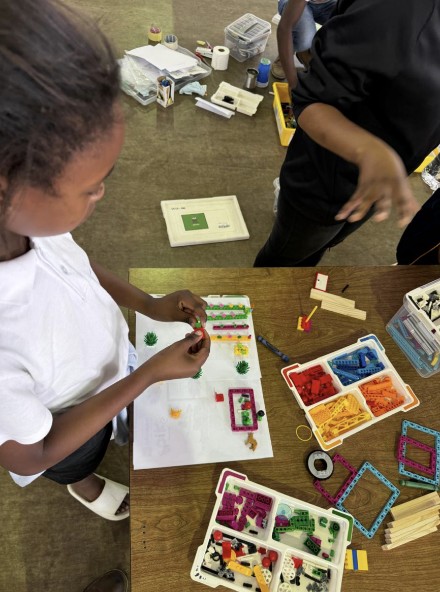
The early years shape language, confidence, attention, emotional regulation, curiosity and early reasoning. These are the building blocks for later literacy, numeracy and STEM learning. If a child enters school already behind, later interventions become more difficult and more expensive. If a child has not had enough stimulation, play, nutrition and responsive care, the education system spends years trying to repair gaps that could have been prevented.
Recent South African evidence reinforces this concern. The Thrive by Five Index 2024 found that only 42% of children assessed were on track for early learning, while 28% were falling behind and 30% were falling far behind (Thrive by Five, 2024). UNICEF South Africa has also emphasised that poverty, malnutrition and inequality continue to limit children’s development, with poor foundations linked to later educational exclusion, unemployment and deeper cycles of poverty (UNICEF South Africa, 2024). The South African Early Childhood Review 2024 similarly warns that many young children remain under-supported in the areas of health, nutrition, caregiving, social protection and early learning (Hall et al., 2024).
This means that Youth Month must also become a conversation about Early Childhood Development (ECD). If we want young people who are employable, innovative and digitally confident, we must invest in the children they once were. Quality ECD is not separate from STEM education. It is the first stage of it. A child who stacks blocks, recognises patterns, tells stories, solves puzzles, experiments with movement and asks “why?” is already developing the foundations of scientific and computational thinking.
If we want young people who are employable, innovative and digitally confident, we must invest in the children they once were.
The Department of Basic Education’s inclusion of Coding and Robotics within the Foundation Phase curriculum direction is therefore significant (Department of Basic Education, 2025). But policy alone will not change outcomes. Implementation must be practical, teacher-centred and equitable. Children in rural and underserved communities need access to quality early learning, trained teachers, age-appropriate resources, play-based STEM activities and continued support as they move through school.
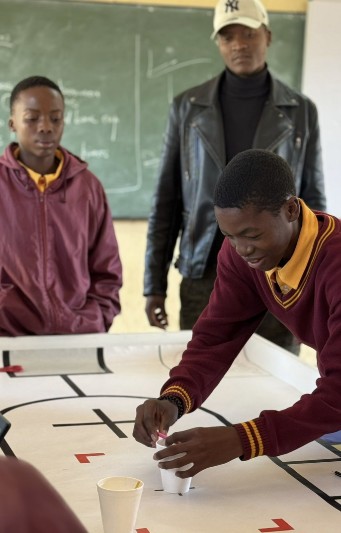
At Siyafunda Education Foundation, our experience in rural STEM education has shown that young people respond powerfully when they are given tools, support and belief. Learners who may never have imagined themselves as problem-solvers begin to build, test, code and collaborate. Teachers who initially feel uncertain about technology grow in confidence when they are supported consistently. Communities begin to see STEM not as something distant or elite, but as part of their children’s future.
That is the kind of pipeline South Africa needs: quality ECD, strong foundational literacy and numeracy, playful early STEM, Coding and Robotics in primary school, mentorship in high school, and pathways into further study, entrepreneurship or employment. We cannot keep treating youth unemployment as an isolated problem at the end of the education journey. It is the result of every missed opportunity along the way.
Youth Month should remind us that young people are not the problem to be solved. They are part of the solution. But their ability to solve problems depends on the foundations we build around them from the earliest years.
If we want to celebrate young people in June, we must be willing to invest in the children they once were and in the learning pathways that make future success possible.
References
- Department of Basic Education, 2025. CAPS for Foundation Phase: Coding and Robotics. Pretoria: Department of Basic Education.
- Hall, K., Sambu, W., Berry, L., Giese, S. and Almeleh, C., 2024. South African Early Childhood Review 2024. Cape Town: Children’s Institute, University of Cape Town and Ilifa Labantwana.
- Statistics South Africa, 2026. South Africa’s Youth and the Labour Market in Q1 2026. Pretoria: Statistics South Africa.
- Thrive by Five, 2024. Thrive by Five Index 2024: Summary of Key Findings for Enrolled Children. Johannesburg: Thrive by Five.
- UNDP South Africa, 2024. Empowering Youth for a Digital Future: Closing the Digital Divide and Paving the Way for a Thriving Digital Economy. Pretoria: United Nations Development Programme South Africa.
- UNICEF South Africa, 2024. Children in South Africa Today: An Analysis. Pretoria: UNICEF South Africa.
- World Bank, 2025. Exploring Digital Skills Demand: Key Insights from Online Job Vacancies in South Africa, Nigeria, Kenya, and Uganda. Washington, DC: World Bank.
- World Economic Forum, 2025. The Future of Jobs Report 2025. Geneva: World Economic Forum.
- Youth Agency for Entrepreneurial Innovation, 2025. Youth Innovation Challenge. Johannesburg: Youth Agency for Entrepreneurial Innovation.