


That is why the North-West University’s (NWU) Faculty of Theology deserves to be understood not as a faculty concerned only with church life, but as a serious contributor to the moral, social and leadership capacity of public life.
The faculty’s own vision makes this argument clearly. It locates theological education within everyday contexts and identifies four evidence-based outcomes: integrated and substantiated knowledge, effective communication, service leadership and inquiry-based problem-solving.
For government, those are not abstract academic ideals. They are the daily disciplines of ethical administration, community-facing leadership and responsible decision-making. This is the central point: public service is a moral practice before it is a bureaucratic function.
Policies matter. Budgets matter. Systems matter.
But none of them can carry the weight of society without leaders who understand human dignity, accountability, trust and the consequences of their decisions.
NWU’s Faculty of Theology, grounded in teaching and learning, research and innovation as well as community engagement, offers a language and training culture that speaks directly to this need.
Timeless truths. Contemporary questions
The faculty is home to two schools: Christian Ministry and Leadership as well as Ancient Language and Text Studies. Together they represent a valuable combination. One develops leaders for ministry, pastoral care and counselling, youth work, missionary work and related fields. The other advances the study of ancient worlds, languages, texts and cultures, with strengths in areas such as ancient cultural studies, cognitive linguistics, translation studies, classical Latin, ancient Greek, Hebrew, Aramaic, Syriac, Akkadian and related topics. The common thread is interpretation: of people, communities, texts, histories, values and contexts.
That interpretive discipline is essential for government leadership. Public servants work in environments where meaning is contested, needs are urgent and trust is fragile.
NWU theology equips students for thoughtful, contextually relevant ministry, leadership and service.
A leader who cannot listen well cannot govern well. A leader who cannot understand context cannot serve justly. A leader who cannot communicate across differences cannot build legitimacy. The faculty’s emphasis on diversity, critical study, effective communication and service leadership therefore has relevance far beyond the lecture hall.
Its School of Christian Ministry and Leadership explicitly connects its work to moral renewal, community service and the development of students for changing contexts. Its approach acknowledges South Africa’s diversity of Reformational, Pentecostal and Evangelical paradigms as an inclusive academic posture. That combination matters. Service leadership in government requires conviction without arrogance, openness without drift and ethics that can survive the pressure of public life.
Shaping a better world
The faculty’s research also strengthens this public mandate. The Unit for Reformational Theology and the Development of the South African Society aims to make a theological-scientific contribution to important debates in South Africa, with research areas including African spiritualities and leadership, moral renewal of society, public practical theology and civil society.
These are precisely the kinds of themes that sit beneath many of the country’s most persistent governance challenges: social fragmentation, institutional trust, ethical leadership, community health and the relationship between belief, culture and public action.

Beyond academic concerns
The community engagement work gives this argument practical force. The faculty describes itself as uniquely situated to offer support, spiritual care and expertise to society. Its ongoing projects include school support, resilience-building with inmates, values and character-building at schools, church leadership support, women empowerment, community health initiatives and public sharing of research.
A 2026 project, presented in collaboration with the South African Academy for Science and Arts, focused on “Missional Fatherhood” as a response to father absence in South Africa. These are not remote academic concerns. They are close to the social realities government must address every day.
For service leadership, the lesson is direct: ethical government cannot be separated from social repair. Departments and municipalities are often judged by outputs, but communities experience government through relationships: whether they are heard, whether promises are kept, whether vulnerable people are treated with dignity, whether leaders show courage when systems fail. The Faculty of Theology’s contribution lies in forming leaders who can think about these questions with depth, not sentimentality.
Ethical government cannot be separated from social repair.
This is where NWU’s brand promise becomes visible. “It All Starts Here” is not merely a line about enrolment or institutional identity. In this context, it points to the beginning of a different kind of public leadership: one that starts with purpose, is disciplined by knowledge and is measured by impact. Purpose and impact start when scholarship moves into communities, when research informs public debate, when students are shaped for meaningful work and when service is understood as responsibility rather than status.
The faculty helps build that foundation.
It all starts here.
https://theology.nwu.ac.za/
https://studies.nwu.ac.za/studies/apply

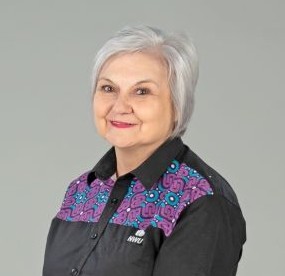 Professor Amanda du Plessis
Prof Amanda du Plessis is an Associate Professor in Practical Theology and Director of the School for Christian Ministry and Leadership at the North-West University. She holds a PhD in Pastoral Studies and specialises in contextual pastoral care and counselling.
Her research focuses on the contextualisation of practical theology and pastoral care within the African context, with particular emphasis on inner healing, prayer and expressive therapy. Her scholarship also explores contextual pastoral education and the role of the university classroom as a space for developing relevant pastoral practice in South Africa.