
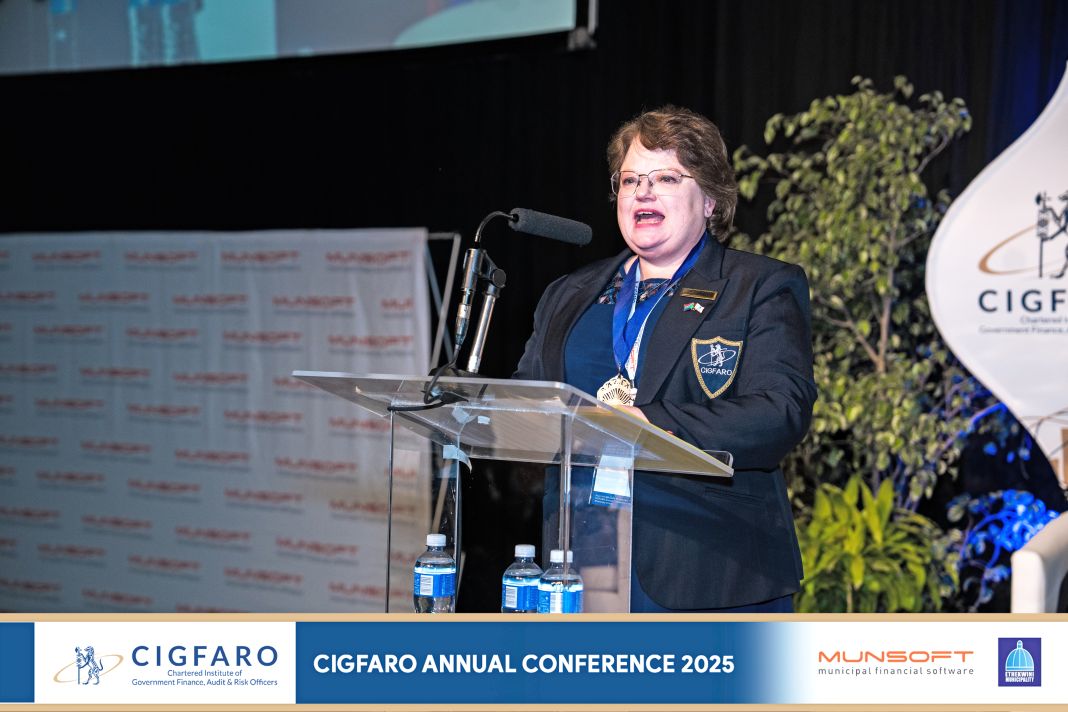
Congratulations on your new appointment! Service wishes you success in your role. Please share your professional trajectory to date.
Thank you for the warm wishes. My journey in local government began humbly as a school learner working part-time in a local library. My responsibilities were simple – packing books and making tea for librarians – but this early exposure sparked my interest in public service and the inner workings of municipal administration.
While in my first full-time role as an actuarial clerk, I applied for a bursary with the City of Cape Town. A year later, I was approached with an offer to fund my Bachelor of Accounting Science studies through UNISA. This was a groundbreaking moment – I was a “test case”, as the municipality had never awarded a bursary to a woman.
I spent nine years in the City of Cape Town’s finance department, completing the Institute of Municipal Treasurers and Accountants (IMTA) Logbook Training Programme and advancing to senior accountant. During this time, I also chaired the IMTA Students Society.
[The Institute of Municipal Treasurers and Accountants was the precursor to the Institute of Municipal Finance Officers (IMFO), now known as the Chartered Institute of Government Finance, Audit and Risk Officers (CIGFARO).]
In 1998, my husband accepted a position in Gauteng and I relocated. After a year with a construction company managing creditors, I joined the Department of Provincial and Local Government (DPLG) [now the Department of Cooperative Governance and Traditional Affairs (CoGTA)] as assistant director. I was later promoted to director, taking responsibility for project viability and working with municipalities in financial distress. This role gave me invaluable insights into the challenges faced by both rural and urban municipalities, ranging from resource constraints to governance complexities.
In 2003, we returned to Cape Town, and I rejoined the City at their request. Over the years, I served in finance, corporate services, electricity services and ultimately returned to finance, where I currently head the valuation department. Here, we prepare the valuation roll internally – a critical function for municipal revenue generation.
Local government is an extraordinary training ground. Its multiple mandates across service utilities, combined with governance and compliance requirements, create a dynamic environment. Opportunities for growth and impact in this space are truly endless.
What is your objective for CIGFARO?
With four years to CIGFARO’s centenary, my primary objective is to firmly establish the Institute as the preferred professional organisation for practical, career-enhancing training. This applies not only to officials in local government but also those in national and provincial spheres. Our focus is on equipping public finance and assurance professionals with the tools and knowledge they need to excel in a rapidly evolving environment.
What are your first three priorities as president of CIGFARO and why are they urgent now?
1. Board stability. Recent resignations have disrupted the natural progression of Board succession and support. Restoring stability is critical to ensure good governance and effective leadership.
2. Member value. We must evaluate and enhance the service offering to members, ensuring they receive tangible benefits that advance their careers and, ultimately, improve service delivery to communities.
3. Advocacy and legislative engagement. With amendments to the Municipal Finance Management Act already published for comment, regulations being drafted and the White Paper nearing completion, CIGFARO’s voice in shaping policy is more important than ever.
CIGFARO is celebrating its 96th anniversary. Which lessons from CIGFARO’s past 95 years will you lean on most as you lead the Institute forward?
CIGFARO has a proud legacy of delivering practical workshops and being a trusted source of information on legislative changes. This tradition will remain central to our operations. By continuing to provide timely guidance and support, we empower finance professionals to adopt new requirements swiftly and confidently.
How do you define success for CIGFARO by the time we reach the centenary year?
Reaching 100 years is a testament to success in itself. It reflects an organisation that has adapted to changing requirements while remaining relevant and impactful. For me, success means that CIGFARO continues to evolve, offering value-driven services and shaping the future of public finance.
What short-term wins can be delivered in 2026 that will demonstrate acceleration of public finance excellence?
The next year will be dominated by advocacy and policy influence. With elections expected in late 2026 or early 2027 and ongoing developments in local government, our role in shaping and responding to policy will be critical.
Local government is an extraordinary training ground.
Municipal income is under pressure while service and regulatory demands are on the increase. What mix of revenue reforms and expenditure discipline would you promote to restore municipal fiscal sustainability?
CIGFARO has already provided significant input into the Local Government White Paper Review. As the draft nears completion, we will continue to engage and provide constructive feedback.

How can CIGFARO help municipal managers better model and communicate the fiscal consequences of unfunded mandates to provincial and national decision-makers?
Unfunded mandates remain a major challenge. Unfortunately, the Financial and Fiscal Commission (FFC) does not always receive legislation with financial implications for other spheres of government.
CIGFARO will step in to fill this gap, identifying expenditure impacts and assisting municipalities in communicating these consequences effectively to provincial and national decision-makers.
What guidance will CIGFARO provide to ensure AI adoption does not widen capacity gaps between well-resourced and poorly resourced municipalities?
Artificial Intelligence (AI) is here to stay. All spheres of government must embrace its benefits within strict policy frameworks. CIGFARO will enhance its information systems and technology offerings, aligning with King V principles to ensure ethical and effective adoption.
If AI can help government deliver better services with the same or fewer resources, it should be embraced – responsibly and inclusively.
How can CIGFARO help bridge the gap between legal obligations in the Constitution and day-to-day fiscal practice at municipal level?
CIGFARO plays a vital role in translating broad constitutional and legislative mandates into actionable practices at municipal level. We achieve this through:
- Professional training and capacity building. Continuing Professional Development (CPD) programmes on the Municipal Finance Management Act (MFMA), Municipal Standard Chart of Accounts (mSCOA), asset management and more.
- Standards and ethics. Upholding professionalism through South African Qualifications Authority (SAQA) recognised Code of Conduct and disciplinary processes.
- Practical resources. Tools like the CFO Handbook (Chief Financial Officers Handbook for Municipalities), offering legislative guidance and practical application.
- Advocacy and policy influence. Ensuring ground-level realities inform legislation.
- Knowledge sharing. Conferences and forums for collaboration on common challenges.
- Accountability and oversight. Supporting municipal public accounts committees and promoting consequence management for financial misconduct.

Professionalisation of the public sector is central to CIGFARO’s mandate. Which skills do municipal finance teams need and how should training be prioritised?
CIGFARO’s training approach is strategic and outcomes-based, focusing on immediate compliance and long-term professionalisation:
- Mandatory compliance training. MFMA and mSCOA fundamentals to improve audit outcomes.
- Core competency gaps. Practical training in asset and revenue management as well as internal controls.
- Ethics and accountability. Embedded in all programmes to foster integrity.
- Consequence management. Leadership training for consistent and reliable enforcement.
- Professional development pathways. Encouraging registration with professional bodies and CPD participation.
Despite these efforts, many municipalities struggle to apply skills effectively due to political interference and resource constraints – often exacerbated by high numbers of indigent residents.
Opportunities for growth and impact in this space are truly endless.
How should excellence be measured across diverse municipalities with very different socio-economic contexts?
Excellence in local government means continuously improving quality of life within a framework of good governance and accountability. Measurement should cover:
- Democratic governance. Transparency and community involvement.
- Service delivery. Reliable, cost-effective and the sustainable provision of basic services.
- Socio-economic development. Promoting prosperity and wellbeing.
- Safe and healthy environment. Ensuring liveable conditions for all.
- Efficient administration. Managing resources economically and in compliance with legislation.
Measurement must remain flexible to accommodate varying capacities and socio-economic contexts.
Looking back at the end of your term, what change or achievement would you most want to be remembered for?
I hope my tenure will be remembered for shaping the future of local government and enhancing communication to finance and assurance professionals on changes impacting their work.