
What can you tell us about trends in African energy?
In the power sector we are agnostic about technology, but the key trends are related to policy enablers and the opening of market-access in power markets through market liberalisation. Many countries are facilitating the introduction of open-access through allowing private-sector generation projects to sell directly by wheeling through the grid to end-users.
Technology-wise, it’s certainly driven by renewables. In the broader African context, hydro remains one of the main renewable technologies, as well as coal power, however renewable energy and storage technologies are becoming more prominent.
If you filter down to our 21 presence markets, mainly in Sub-Saharan Africa, our key theme is driving growth through power sector developments. Renewable-energy, transmission, unlocking trading of electricity and regional integration are the other important factors.
In future, we anticipate the key drivers of growth are going to come from renewable energy, battery-energy storage, grid optimisation and transmission development. One needs to acknowledge some initiatives around gas-to-power, but the key challenges are access to sustainable and cost-effective gas supply, the timing of gas infrastructure development and the ability to deliver.
You distinguish power from energy. What’s the difference?
When you generally talk about energy, you could include oil and gas. In the Standard Bank context, upstream oil and gas, downstream oil and gas and gas development are all included in the broader “energy” category. The power sector focus is related to our focus on generation, transmission and distribution focusing on broader ecosystems related to value chain, industrialisation and opportunities.
Is transmission development different to grid optimisation?
Transmission development is the wires, if I can put it like that. Grid optimisation is about the system approach, efficiency, and holistic approach including software, balancing system management and the integrated complex grid system. As more renewables are introduced, you need better management of the overall system in terms of demand-supply management, system optimisation and load management.
Are you tracking the percentage of financing that is going to renewables?
In my focus area of power generation specifically, including various technologies aligned with our climate policy, renewables are far more than any of the other generation technologies.
Is there a geographical hotspot for power investment?
Our portfolio remains concentrated in South Africa, reflecting the country’s focus over the past 10 to 15 years on expanding supply and creating new investment opportunities. This has been supported by a progressive policy environment, including market liberalisation and a strong renewable-energy programme.
Outside of South Africa, these markets remain an important focus area given our Pan-Africa footprint: there are good opportunities in Zambia, where we have initiated innovative structures and linked market to supply projects. Zambia is a key market, whilst Namibia will continue to growth.
Eswatini is worth highlighting given our recent success in closing projects. We were the sole funder to all of the country’s renewable projects to date, and although small, it remains a key focus. intraIt is also worth mentioning Kenya where we have a large portfolio through our funding for wind, solar and other technologies as we believe it’s a market that will continue to grow.
It is also important to acknowledge the regional integration, and the regional opportunities across these markets.
Through agreements such as those that SADC countries have signed?
Yes, the Southern African Power Pool, SAPP. A key focus will be to find bankable ways to support greenfields projects looking at selling into SAPP. How do we support bankability? At the moment, there is limited commercial funding towards projects with100% offtake selling into SAPP, as the market and regional opportunities through grid development and connectivity evolves, these will become more feasible.
You mentioned Kenya. Is Standard Bank involved in the Seriti Green projects in that country? (The Meru County Energy Park is a 120MW wind and solar hybrid facility.)
We are a shareholder in Seriti Green as Standard Bank initiated the introduction of WindLab to Seriti Resources at the time. Seriti Green has become an important market player with a well-developed pipeline, mostly in Mpumalanga, where we’ve been leading funding to date.
Is it a deliberate strategy of Standard Bank to invest in renewable companies?
Seriti Green was specific and made strategic sense as we apply our objectives and guidelines. We are partners/funders to Seriti Resources, they were considering opportunities to diversify. When we brought them this opportunity, they offered us that chance to take consider an equity position. It was really on the back of us partnering with our clients, and unlocking growth opportunities, being strategic with a long-term partner where we support value unlock.
What challenges is the power sector experiencing?
In South Africa, grid capacity remains a critical constraint, limiting the pace of renewable energy projects currently under development.
Across the East African Power Pool, many new hydro projects are being developed and built. For now, these projects mainly serve their domestic markets. However, greater investment in transmission infrastructure would allow power to move more efficiently across borders and improve regional effectiveness.
Cross-border potential also remains important between SADC with countries like Zambia, Namibia and Botswana offering more if transmission development is being prioritised.
Has the plan to have private investment into the grid in South Africa moved to the point where there are investable projects?
The process called independent transmission projects (ITP) is very similar to the process followed under the Renewable Energy Independent Power Producers Programme (REIPPPP). ITP launched in 2025, a request for information (RFI) was issued and responses evaluated. Pre-qualified bidders were then announced and they are currently progressing to the next stage.
It is clear the government is focused on moving the ITPs forward. There is a delay around the Credit Guarantee Vehicle (CGV) which is important for bankability and risk allocation.
So, you expect a call from one of those bidders?
We’re already talking to all of them. We have analysed the programme and remain proactive and engaged through discussion.
This comes back to my comment around us partnering with our clients. We are solutioning with our clients as we analyse the documents. We have highlighted some questions around risk allocation, for example.
Would you describe Standard Bank as a leader in renewable energy?
Absolutely. If you look at market share, definitely, and if you look at the number of deals and funding we’ve closed and committed to date, the support we’ve given to our clients. We’re leading the approach to banking aggregators and traders, not only in South Africa, but also in Zambia. We were the first to close these transactions and to provide support through liquidity-guarantee structures.
So, you are specialists in this. How big is your team?
We’ve got quite a diverse structure. I lead the sector team, and then we have different product houses. While most of these projects are being done through our project-finance team, we also ensure being proactive through trade solutions and global market products. The broader power and renewables portfolio includes generation, transmission and distribution, as well as the value-chain ecosystem around it, like equipment suppliers, solution providers and green hydrogen.
Those first three are basically the three sections into which Eskom is going to be split one day. And you’ll be ready?
We will be ready.
Is African renewable energy an attractive destination for global investors?
It’s important to qualify “global investors”, on the equity side, we do see increased interest from global players. It’s ranging from private equity funds, strategic equity players like global utilities.
Outside of South Africa, there certainly is an appetite for these global DFIs to be involved. Blended finance is a key theme coming through, given the quantum of capital required, commercial banks like us are open to partner with DFIs.
To what extent are regulatory frameworks keeping up with the energy sector and its investment needs?
We have an enabling environment in South Africa. As an example, during loadshedding, many projects were able to be constructed to support the supply to corporates, through market-enabling policies to have the ability to wheel power and to be able to sell to local industry.
If you look outside of South Africa, that’s exactly what we’ve seen in Zambia. In trying to address loadshedding, Open Access is becoming a theme, with more and more countries supporting these developments through policy frameworks and initiatives to enable increased supply and flexibility.
Will many of them will look to the South African model?
That’s exactly why we are keen to be able to support more development from our learnings, and why it’s important for us, given our presence in these markets, to drive new developments and partner with our clients.
Do you actually have an advisory department?
We normally partner with our clients through various product and service offerings. We do have a mergers and acquisitions (M&A) advisory unit. It is important to ensure that our clients, including new market entrants and clients, understand the key considerations, market drivers and risk considerations in executing and funding opportunities. And important to guide and support throughout the process and enable our partners as a commercial bank to be able to fund and execute.
…Open Access is becoming a theme, with more and more countries supporting these developments through policy frameworks and initiatives to enable increased supply and flexibility.
What philosophy underpins your approach?
I would like to reiterate our partnership approach with our clients. We’re open-minded, solution-driven and client-centric in our approach. We support clients by being far more progressive around our foresight and understanding market shifts and future trends. Three years ago, we anticipated this market moving to more of an open market with traders, and we started to bank those traders on a far more proactive basis.
It’s important to us to have trusted partners and to ensure we deliver. We’re proactive, we’re innovative, we work with our clients, we’re prepared to go the extra mile and facilitate support across the ecosystem.
Is Africa on track to give power to its people?
I think it’s moving in the right direction. I think it’s fair to say that it’s not always as fast as it should be. It should certainly get the attention to be fast-tracked in terms of impact and execution. We’ve seen more focus on implementation and execution, but it can be faster.
Biography
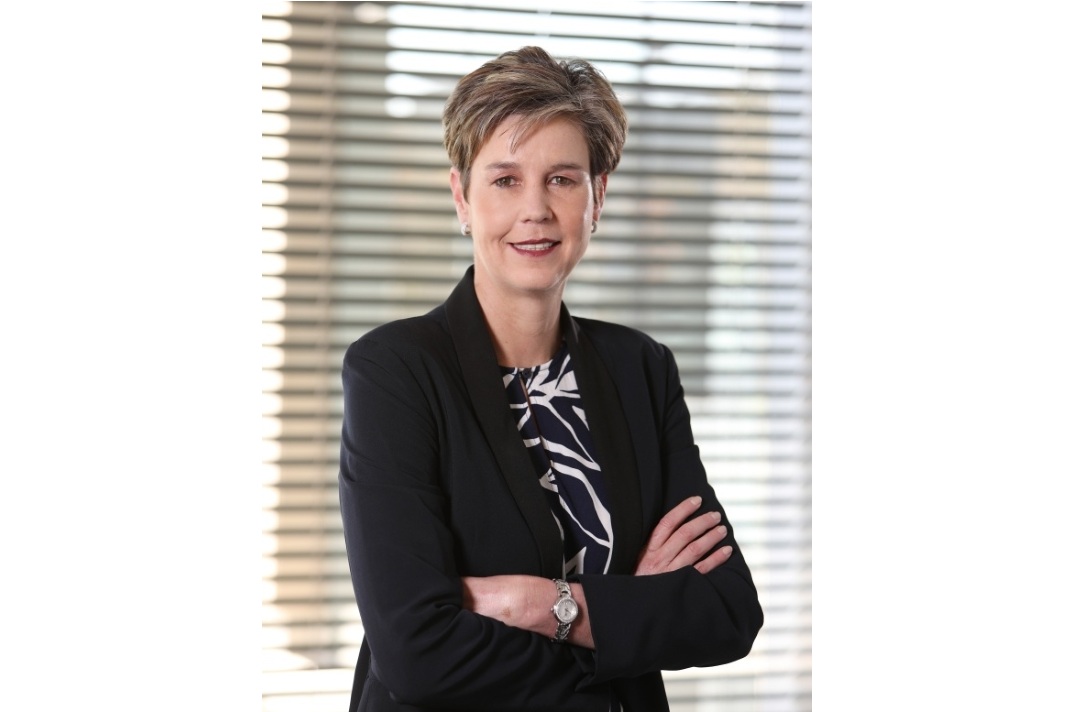
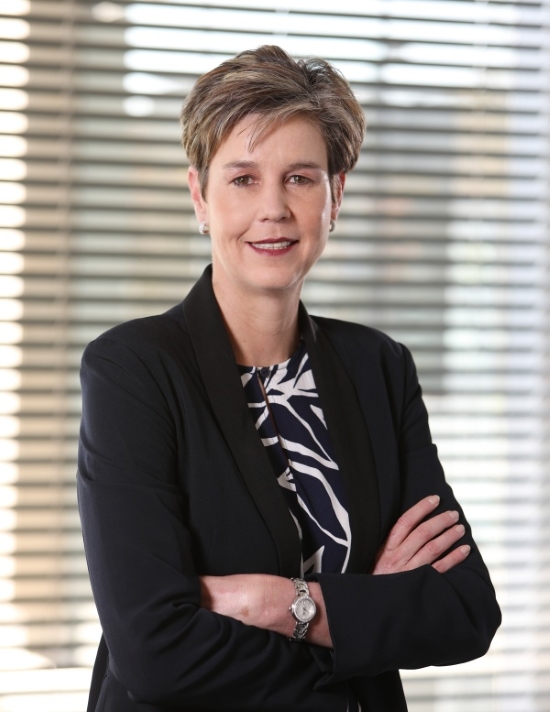
Rentia Van Tonder, Global Head for Power and Renewable Energy, Standard Bank Corporate and Investment Banking.
Rentia joined Standard Bank in 2014, with a focus on developing and implementing opportunities for Standard Bank to be the leading funder of renewable and power projects in South Africa and the rest of Africa.
Rentia’s experience ranges across various sectors where she previously worked in the Economic Research department and Mining Business Unit at the Industrial Development Corporation (IDC) and was seconded to the office of the minister of Minerals and Energy as advisor. Also has extensive experience in the Wood and Paper sector and Green Industries, when she led a team focused on renewable energy, energy efficiency, fuel-based energy and other green related initiatives. She has been focusing on the power sector since 2010, driving towards funding and growing the sector across the continent.
Qualifications: BSc (Hons) Mathematics and Mathematical Statistics, MBA, EDP.