
A looming copper-supply gap is poised to widen as electricity demand accelerates and new vectors – such as the race for artificial intelligence and surging defence spending – add to the call on copper. According to “Copper in the Age of AI: Challenges of Electrification”, a comprehensive new study by S&P Global, the emerging supply deficit constitutes a “systemic risk for global industries, technological advancement and economic growth”.
The study finds that the “accelerating pace of electrification” is projected to swell copper demand to 42-million tons by 2040, a 50% increase from current levels. Yet existing supply is currently poised to decrease in coming years as the mining sector faces challenges across the copper value chain.
The study projects that global copper production will peak in 2030 at 33-million tons. Unless significant adjustments are made, the widening disconnect will result in a supply deficit of 10-million tons by 2040 – 25% below projected demand.
This “substantial shortfall” occurs despite what the study expects will be a more than doubling of recycled copper scrap, from four-million tons today to 10-million tons by 2040.
“Here, in short, is the quandary: copper is the great enabler of electrification, but the accelerating pace of electrification is an increasing challenge for copper,” said Daniel Yergin, Vice Chairman, S&P Global, who co-chaired the study. “Economic demand, grid expansion, renewable generation, AI computation, digital industries, electric vehicles and defence are scaling all at once – and supply is not on track to keep pace. At stake is whether copper remains an enabler of progress or becomes a bottleneck to growth and innovation.”
The study leverages S&P Global expertise and proprietary data across the company’s Energy and Market Intelligence divisions. Projections are based on a detailed bottom-up, technology-by-technology approach to quantify demand at its point of consumption, as opposed to production. This enables a better estimate of the embedded demand for the metal and the potential shortages or surpluses countries could face due to disruptions across the supply chain.
“Several countries have deemed copper a ‘critical metal’ over the past half decade, including, in 2025, the United States. And with good reason,” said Carlos Pascual, Senior Vice President, Geopolitics and International Affairs, S&P Global Energy, and study co-chair. “Copper is the connective artery linking physical machinery, digital intelligence, mobility, infrastructure, communication and security systems; the future availability of copper has become a matter of strategic importance.”

The future of copper demand
S&P Global Energy projects global electricity demand will increase by almost 50% by 2040. Meeting this demand will require adding the equivalent of roughly 330 Hoover Dams, or over 650 one-gigawatt nuclear reactors, each year between now and then.
The new study finds demand for copper – as the enabling material for this massive growth in power demand accelerating across four key vectors, two of which are:
- Core economic demand from construction, electric appliances, internal combustion engine vehicles, rail, shipping, aviation, power generation and more constitutes the largest overall share of demand, reaching 23-million metric tons (53% of global demand) by 2040.
- Energy transition and additional demand – from electric vehicles, battery storage, renewable power capacity and power transmission and distribution, as well as electrification in developing countries – commands the largest amount of total growth, increasing by more than seven-million tons to a total of 15.7-million tons over the same period.
Demand from just these two categories will exceed copper supply by more than seven-million tons in 2040, the study finds. The gap widens further when you consider additional areas that have emerged in just the past few years, namely the rapid growth in AI and data centres and rising defence spending.
S&P Global expects total installed capacity for all data centres to be roughly 550 gigawatts by 2040, more than five times what it was in 2022. At the same time, global defence spending could double to $6-trillion by 2040 amid increased international tensions and the emergence of new threats, the study says.
These two emerging vectors, AI and data centre demand and defence demand, are each expected to roughly triple by 2040, representing a combined four-million tons of additional demand.
The study also identifies a potential fifth vector of demand – humanoid robots. While the technology remains in the early stages, some project that there could be one-billion to 10-billion humanoid robots in operation by 2040. One-billion humanoid robots in operation by 2040 would mean about 1.6-million tons of copper required annually, or 6% of current copper demand, the study says.
Closing the supply gap
Overcoming the impending supply shortfall will ultimately depend on the development of new mines and the expansion of existing assets. The study estimates that an additional 10-million tons of this “primary supply” will be required by 2040, on top of increased recycling. However, without significant investment, global primary supply would produce just 22-million tons by 2040 – one-million tons less than today.
Reversing the current supply trajectory will be no small task, the study says. The copper sector faces a host of challenges above and below ground, ranging from declining ore grades; rising costs for energy, labour and other inputs; increasingly complex and difficult extraction conditions; environmental opposition, lengthy judicial reviews and pressures from investors and governments. It takes 17 years, on average, for a new copper mine to go from discovery to production.
“Primary production – mining – remains the irreplaceable foundation of copper supply,” said Eleonor Kramarz, Global Head of Critical Minerals and Energy Transition Consulting, S&P Global Energy. “Bridging the impending supply gap depends not only on geology, engineering, logistics and investment, but also on governance and policies. That translates into timeliness in permitting and consultation, a time clock on litigation and stability in governance and regulation. The alternative is uncertainty, and uncertainty comes at a hefty cost.”
Concentration of the supply chain presents another challenge, the study finds. Six countries are responsible for roughly two-thirds of mining production. Processing capacity is even more concentrated, with a single country, China, commanding roughly 40% of total smelting capacity and 66% of the imports of the main input, mined copper concentrate. Such concentration makes global supply and pricing vulnerable to disruptions, policy shocks and complex trade barriers, the study says.
“The future is not just copper-intensive, it is copper-enabled. Every new building, every line of digital code, every renewable megawatt, every new car, every advanced weapon system depends on the metal,” said Aurian De La Noue, Executive Director, Critical Minerals and Energy Transition Consulting, S&P Global Energy. “Multilateral cooperation and regional diversification will be crucial to ensure a more resilient global copper system – one commensurate with copper’s role as the linchpin of electrification, digitalisation and security in the age of AI.”
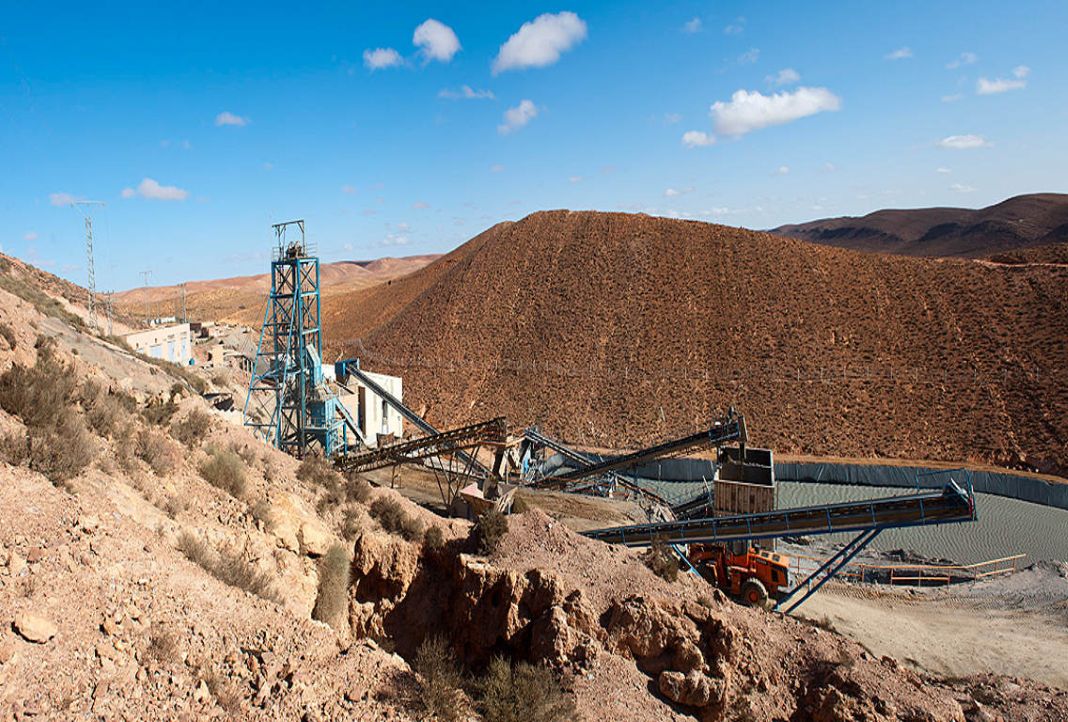
Copper in South Africa
The final section of a 2025 report published by the Directorate Mining and Economic Statistics of the Department of Mineral and Petroleum Resources reads as follows:
Outlook
Global outlook for copper is strongly bullish, driven by a structural rise in global demand alongside persistent supply constraints. Key drivers for growth in the copper industry will include the rapid expansion of EVs, renewable energy infrastructure like wind and solar and large-scale power grid upgrades. It is forecast that copper demand could grow at a compound annual rate of 2.5% to 3%, with energy transition sectors growing even faster. However, supply is expected to lag due to geological challenges, declining ore grades and long project development timelines leading to market deficit.
These supply-demand dynamics could lead to an upsurge in copper prices regardless of impending risks associated with global economic slowdowns, trade tensions or breakthroughs in substitute materials. The copper market appears to be entering a long-term supply-constrained super cycle fuelled by the global push towards electrification and decarbonisation.
South Africa’s copper industry is poised for a cautiously optimistic trajectory, driven by global demand for copper in renewable energy and electric vehicles, alongside local initiatives to revive historic mining operations. The country’s copper market is forecast to expand at a compound annual growth rate of around 4.5% between 2025 and 2032, with market value rising from about $5.2-billion to $7.4-billion.
Growth in the country’s copper industry will be driven by the revival and modernisation of cornerstone operations like the Palabora Mine in Limpopo, along with promising new projects in the Northern Cape, such as Orion Minerals’ Prieska and Okiep initiatives and the Copper 360 programme, which collectively aim to tap into South Africa’s extensive reserves and extend mine life through innovation and sustainable practices. South Africa’s copper production is expected to increase as these projects come on stream and ramp up production.
These projects are expected to pave the way for South Africa to be a larger supplier of copper to support the global energy transformation. Domestic consumption is also expected to improve, as Transnet and the Passenger Rail Agency of South Africa (PRASA) embark on refurbishing their railway infrastructure. The construction sector is also expected to improve on public infrastructure projects in the fields of energy, transport, housing and digital infrastructure. It is anticipated that despite potential market fluctuations, the copper price is likely to experience a significant increase in the next decade.
This surge is expected to necessitate substantial capital investments to find, extract and beneficiate these resources to maximise the benefits from the new gold rush. South Africa’s copper industry has strong underpinnings for meaningful growth in output and investment through strategic modernisation and exploration.
About the study
Copper in the Age of AI: Challenges of Electrification is available at https://www.spglobal.com/en/research-insights/special-reports/copper-in-the-age-of-ai
The study analyses the global outlook for copper supply and demand through 2040, focusing on copper’s essential role in electrification, digitalisation and emerging technologies such as AI, data centres, electric vehicles and defence. Leveraging S&P Global’s cross-divisional expertise and proprietary data across the company’s Energy and Market Intelligence divisions, the report uses a bottom-up, sector-by-sector approach to quantify future copper requirements and assess the ability of mining, recycling and processing to meet projected demand.
The study examines the operational, regulatory and market challenges facing copper supply chains, including above-ground risks, permitting delays, trade dynamics and talent shortages. It benchmarks the scale of the potential supply shortfall and highlights the factors that could constrain or enable future growth.
This report does not make policy recommendations. It is intended to inform and support dialogue on the challenges and opportunities shaping copper’s role in the global energy transition and digital economy. The analysis and metrics developed during the course of this research represent the independent analysis and views of S&P Global.
This study was supported by the following organisations: Anglo American plc; Barrick Mining Corporation; BHP Ltd; Freeport-McMoRan Inc; Google LLC; Gunvor Group; Lundin Mining Company; Northern Dynasty Minerals Ltd; Resolution Copper; Rio Tinto Corporation; Saudi Arabian Mining Company (MAADEN); Taseko Mines Limited; Trafigura Group Pte Ltd; and Vale Base Metals and Vale SA.
S&P Global is exclusively responsible for the analysis, content and conclusions of the study.
About S&P Global
S&P Global (NYSE: SPGI) enables businesses, governments and individuals with trusted data, expertise and technology to make decisions with conviction. We are Advancing Essential Intelligence through world-leading benchmarks, data and insights that customers need in order to plan confidently, act decisively and thrive economically in a rapidly changing global landscape. From helping our customers assess new investments across the capital and commodities markets to guiding them through the energy expansion, acceleration of artificial intelligence and evolution of public and private markets, we enable the world’s leading organisations to unlock opportunities, solve challenges and plan for tomorrow, today. Learn more at www.spglobal.com