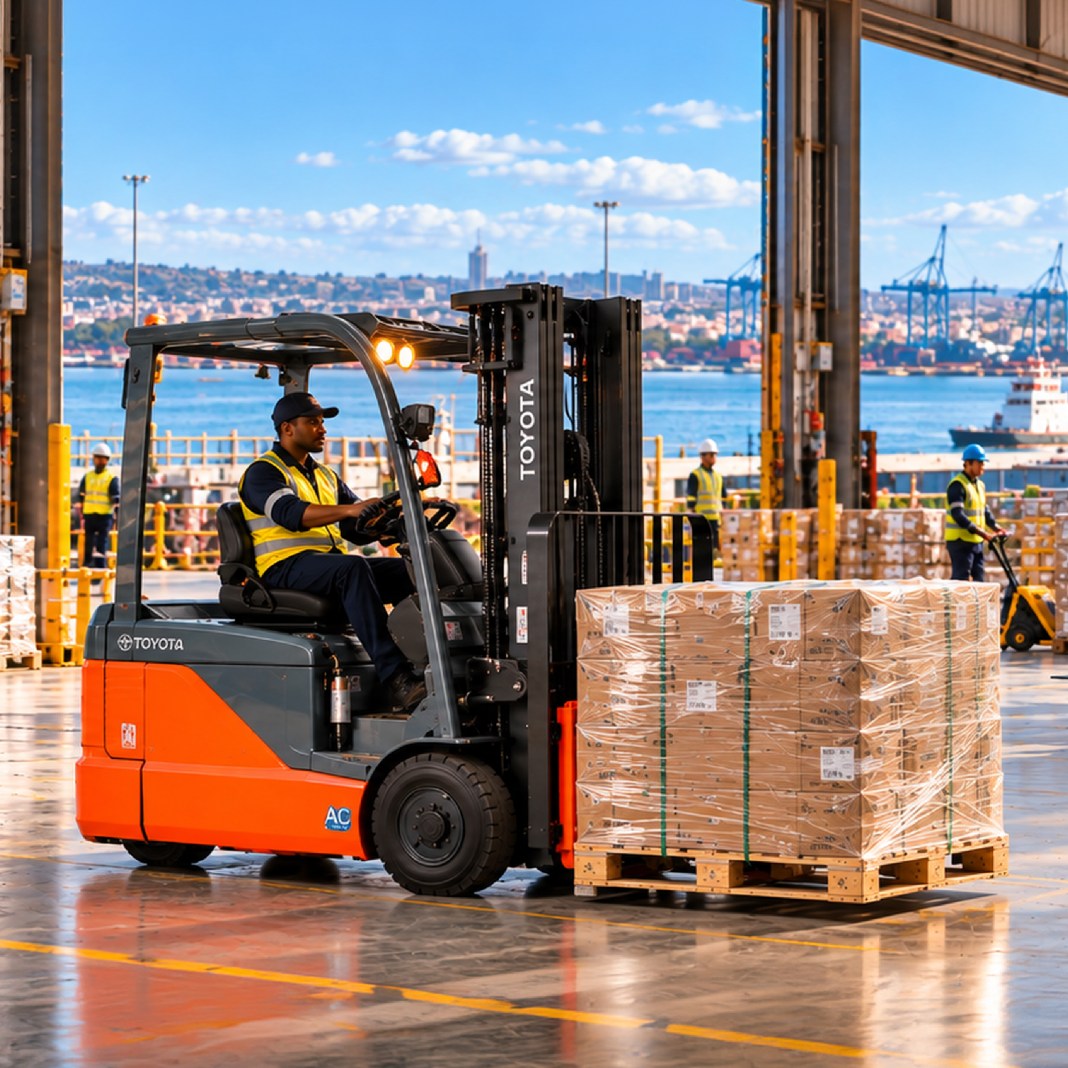
For Eastern Cape businesses facing seasonal demand, project pressures and tighter capital budgets, rental and pre-owned equipment offer a smarter way to keep capacity reliable without tying up capital.
Charl Snygens, Regional Sales Manager for Toyota Material Handling, a division of CFAO Equipment, says rental and pre-owned equipment options can provide practical alternatives to purchasing new machinery outright, giving businesses greater flexibility in how they build and manage their fleets.
“Rental equipment offers flexibility without requiring a long-term capital commitment for companies facing short-term increases in workload. Equipment can be added when demand rises and returned or reduced when requirements change.”
For businesses that want to own their equipment but are constrained by their budgets, pre-owned equipment can provide a more affordable route to fleet expansion.
Snygens says this allows businesses to access equipment at a lower initial acquisition cost while still adding productive capacity to their operations. “For operations where upfront capital is a key consideration, this route can help make fleet investment more manageable.”
Both options can help businesses reduce capital pressure. Instead of committing significant funds to new equipment across an entire fleet, companies can consider a combination of owned, rented and pre-owned machines according to operational requirements. This approach can support more deliberate allocation of capital to other areas of the business.
Reliability remains an important consideration. Access to dependable equipment, supported by appropriate aftermarket service, maintenance and parts support, can help businesses keep machines productive and minimise disruption. When evaluating rental or pre-owned equipment, the availability of technical expertise and ongoing support should therefore form part of the overall decision.
Snygens says the value of a fleet ultimately extends beyond its purchase price. “Controlling the total cost of ownership means considering factors such as maintenance, downtime, financing, utilisation, parts and the expected working life of equipment. Rental and pre-owned options can give businesses additional ways to structure these costs around their actual operating needs.”
For Eastern Cape businesses navigating changing workloads and cost pressures, a flexible fleet strategy can provide a practical balance between capacity, affordability and operational continuity.
“Rather than relying on a single acquisition model, businesses can consider the mix of rental, pre-owned and new equipment that best aligns with their specific requirements,” concludes Snygens.