
For more than a century, Gauteng’s economy has been synonymous with gold. The province’s mineral wealth transformed it into Africa’s industrial and financial centre, attracting investment, businesses and workers from across the continent. As the global economy becomes increasingly driven by data, connectivity and computing power, Gauteng may be approaching another defining economic transition. This time, the opportunity lies in the digital infrastructure that powers modern economies.
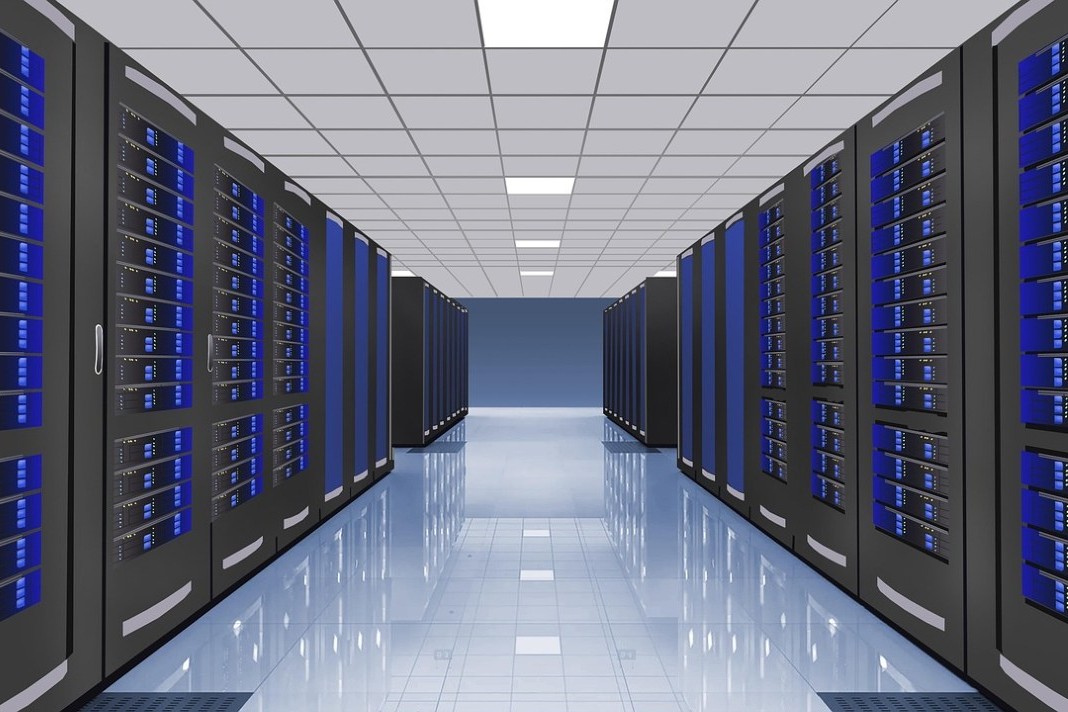
Artificial intelligence, cloud computing, fintech, digital banking and advanced manufacturing all depend on a critical piece of infrastructure: data centres. While they may not capture public attention like mines or factories, they are becoming the backbone of the modern economy. Countries that can process, store and move data efficiently are increasingly attracting investment, innovation and high-value industries.
The investment signals are already evident in Gauteng. Between January and April 2026, communications infrastructure accounted for R634-million, or 54% of all foreign direct investment announced in the province. The largest single investment was Equinix’s R574-million expansion, reinforcing Gauteng’s growing importance as a digital infrastructure hub.
Countries that can process, store and move data efficiently are increasingly attracting investment, innovation and high-value industries.
Gauteng is not starting from scratch. South Africa has 55 operational data centres, with an estimated 35 to 40 in Gauteng. This accounts for around 70% of the country’s installed data centre capacity, and making the province the largest data centre hub in Africa. Gauteng is also home to the country’s largest concentration of financial institutions, multinational headquarters and enterprise customers, creating sustained demand for cloud computing, cybersecurity and digital services.
Cassava Technologies’ R1.75-billion commitment to Gauteng, part of a R3.6-billion national investment, demonstrates the wider value of data centre investment. Anchored by its Tier IV Africa Data Centres campus in Midrand, the investment will expand fibre networks, data centre capacity and AI computing infrastructure. For Gauteng’s banks and fintech companies, the benefit extends beyond additional computing capacity. It enables them to run cloud and AI workloads on infrastructure located and governed within South Africa. Their data can remain within national jurisdiction and be managed in accordance with POPIA. This can help remove a major regulatory barrier to technology adoption in the province.
Globally, the race to build digital infrastructure is accelerating. Artificial intelligence has fuelled unprecedented demand for computing power, with global data centre electricity consumption expected to reach around 565 terawatt-hours in 2026. Yet Africa accounts for only 0.6% of global data centre capacity, highlighting both the continent’s infrastructure gap and its investment potential. As technology companies expand globally, they are seeking locations with reliable energy, high-capacity fibre networks and a supportive investment environment.
Africa accounts for only 0.6% of global data centre capacity, highlighting both the continent’s infrastructure gap and its investment potential.
International experience shows what is possible. Ireland has leveraged digital infrastructure to attract some of the world’s largest technology companies, with data centres supporting more than €100-billion in annual Gross Value Added across digitally intensive sectors. India is pursuing a similar transformation, with its digital economy projected to contribute 20% of GDP by 2030. These experiences demonstrate that data centres are not merely buildings housing servers. They are strategic assets that attract technology investment, support innovation and strengthen economic competitiveness.
In Gauteng, the opportunity extends well beyond the data centres themselves.
Every new facility strengthens the ecosystem supporting artificial intelligence, fintech, cloud computing, software development, digital media and advanced manufacturing. These industries create high-value jobs, stimulate innovation and improve productivity across the wider economy. In this sense, data centres are not the end goal. They are the foundation on which future industries are built.
Gold made Gauteng South Africa’s economic capital. Data has the power to secure its place as Africa’s undisputed digital capital. The foundational advantages—infrastructure, skills, and market demand—are already in place.
The mandate now is to build aggressively on that advantage by securing reliable energy solutions, expanding renewable power integration, upskilling the local workforce, and maintaining a pro-investment climate. If Gauteng executes this vision, the next great chapter in its economic story will not be written underground, but in the secure, high-speed data streams powering the global economy.
Invest in Gauteng
Gauteng is the epicenter for growth – it is South Africa’s economic engine and an important launching pad for local and international businesses into African markets.
As the implementing arm of the Gauteng Department of Economic Development (GDED), the GGDA provides a seamless one-stop shop service aimed at unlocking investment and expansion opportunities for local and global businesses, whilst facilitating the ease of doing business.
Explore business growth opportunities, make Gauteng your base of operations in Africa. Contact the team today: