
What does it mean to build with purpose? At its heart, the role of the Mandela Bay Development Agency is simple: to bring neglected areas back to life and to create opportunities for communities and businesses to thrive. The real measure of success is whether each project serves a clear purpose and addresses a need for the city and its communities. Sometimes that need is about safety. Other times, it’s about preserving heritage, beautifying spaces, or creating an environment for opportunity or development.
Our agency was established through a partnership between the Nelson Mandela Bay Municipality and the Industrial Development Corporation in 2003. As a municipal entity, we work under national legislation and a formal Service Delivery Agreement with the Municipality. Every project we implement is guided by a mandate that is approved by the Council, to ensure that development is aligned with the city’s broader goals.
In development, the answer cannot rest on financial viability alone. A project may be financially and technically sound, but it could still fall short if it does not contribute meaningfully to the place and the people it is meant to serve.
What this means for us at the MBDA is that clarity of intent must be the starting point for every project.

When we transformed the South End Anglican Church ruins into St Peter’s Rainbow Village, the goal was not only beautification of the area. It was about reclaiming a public space for community use, tourism, and heritage preservation. St Peter’s is now a site that honours 150 years of South End heritage. It is open to the public and has become a place that everyone in the city can enjoy.
Listening carefully to residents and businesses helps us distinguish between what is desirable and what is necessary.
An annual Economic Impact Assessment survey reveals key insights into the progress and challenges of urban regeneration efforts in Central, North End and the Kariega CBD. These are the three main precincts under our mandate from the Nelson Mandela Municipality to revitalise parts of Nelson Mandela Bay through focused capital investment and operational programmes. A new report is currently in production and will be released to the public in June this year. It enables us to take a closer look at the economic and social impact of the agency’s mandated interventions and identify gaps, needs and community desires.
Listening carefully to residents and businesses helps us distinguish between what is desirable and what is necessary.
Integration is a key consideration, as projects do not exist in isolation. The CBD security programme is a good example of this. The programme combines technology with on‑the‑ground response, and the programme is aligned with broader city safety efforts rather than functioning as a stand‑alone intervention. The system helps monitor public spaces, heritage sites and busy streets in locations like Stanley Street, St George’s Park, Parliament Street and the Donkin Reserve which are under active surveillance, alongside community facilities such as the Helenvale Resource Centre.
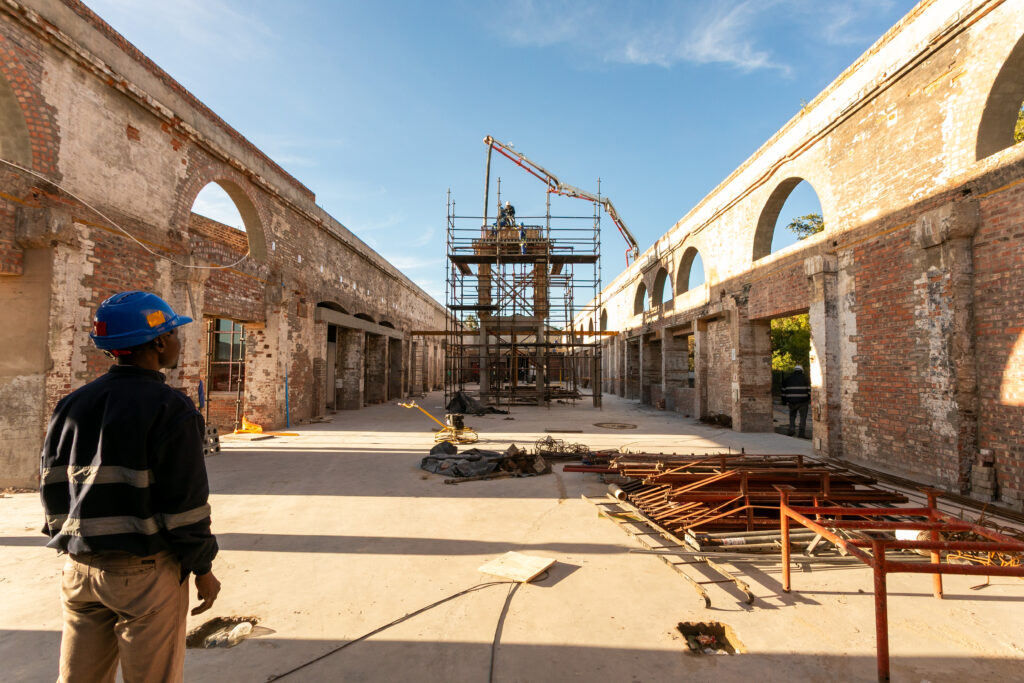
Partnerships also matter. The ongoing and rapidly concluding transformation of the Kariega Railway Sheds saw the MBDA work with local contractors and artisans. Once complete, the Kariega Railway Sheds will house a Small Business Incubation and Business Park, with flexible workspaces to support SMMEs and start-ups. The location of the Railway Sheds was a key factor in the decisions made for the site’s future: Kariega is in a prime position close to major industry and the Coega SEZ. The Railway Sheds themselves are adjacent to the Nelson Mandela Bay Science and Technology Centre, which makes STEMI (Technology, Engineering, Mathematics and Innovation) education accessible to young people across the Metro.
The Sheds are thus in an excellent position to build something that truly supports innovation, young people and small businesses.
The project mirrors the successful Tramways redevelopment in the Baakens Valley, where public investment helped attract private sector growth. The Tramways now functions as a bustling events venue, housing the MBDA offices as well as on-site tenants.
Support and alignment with existing enterprises is a logical and critical consideration. Nelson Mandela Bay’s tourism industry is a key driver of the economy. It makes sense, then, that the team behind the Nelson Mandela Bay Stadium put every effort they can into bringing high profile sporting events to the city. In February this year, we announced that Springboks would be returning to NMB Stadium in June. This puts Nelson Mandela Bay on an international stage and provides an opportunity to showcase our city to millions of viewers. The tourism revenue and exposure generated by hosting the Springboks could translate into millions of Rands in direct spending in Nelson Mandela Bay.
These efforts are bolstered by the broader urban regeneration strategy to support the development, growth, and upkeep of the North End precinct. Being able to bring a match of this caliber to our communities is something we’re incredibly proud of.
Finally, accountability must – and does – underpin all of this. The Agency has established clear metrics with regular and thorough evaluation of all decisions that are made. When outcomes fall short, we adjust and learn. Ultimately, building with purpose means that we contribute meaningfully to a broader trajectory of sustainable and inclusive development in Nelson Mandela Bay.
Find out more, visit www.mbda.co.za
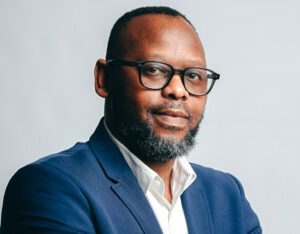
Mr Unati Peter was appointed Acting CEO of the MBDA on the 16th of January 2026. He is the Finance Manager at the MBDA.
He has extensive experience in the public sector including stints as Acting Chief Financial Officer. Amongst a string of qualifications, he also holds an MBA from NMU.