
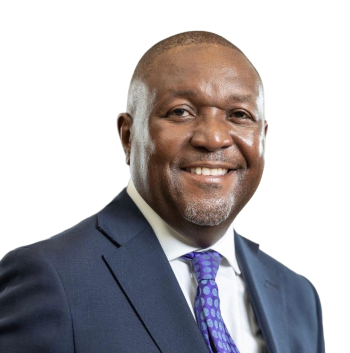
On the occasion of the release of Standard Bank’s 2026 Africa Trade Barometer Andrew Mashanda, Head, Business and Commercial Banking, Africa Regions and Offshore, Standard Bank Group, Johannesburg, South Africa, sat down for an exclusive interview with The Journal of African Business. Topics included how the global crisis can be an opportunity for Africa, why “buy local” and intra-African trade don’t have to be mutually exclusive and which sectors are attracting investment now.
How do agreements like the African Continental Free Trade Area (AfCFTA) square with ideas like “buy local” and some countries’ industrial policies?
I will answer in two main ways. First and foremost, we know that many of our economies are fragile. South Africa is the most industrialised economy we have on the continent; it has a fairly robust and vigorous economy.
So when South Africa talks of buying local, it has a history and an experience of developing for itself, but South Africa has also had the responsibility of developing the Southern African Development Community (SADC). All of the SADC countries around South Africa will tell you that South Africa is their largest trading partner, so there is a dependence on some South African manufacturers by some of the economies.
The second thing is that countries are looking at increasing value addition within the economy. So, when they pursue “buy local” they are actually helping the local entrepreneurial ability to thrive in those economies. If we encourage young people to get into basic agri-processing such as grinding maize or creating maizemeal for making pap, we are actually getting them plugged into the local market. What that does is retain a lot of the value that is created within an economy in that country.
The strength of the economy and its ability to trade without other countries starts off by building the strength of the local economy. This creates a sense of economic patriotism within the economy and is a key catalyst for growth at a country level.
However, no country has everything that it needs and no country has the manufacturing capabilities for absolutely everything that it needs to grow its economy, so we import machinery and manufacturing equipment from China, for example.
South Africa is exporting a lot of manufacturing equipment, not only to the rest of the African continent but to Europe and to some of the markets of the Middle East. This means there is an inter-dependency among ourselves, where we can never fulfil our needs by focusing purely on our own economies.
Strengthening our own economy as a policy and strengthening our governance processes, simplifying our ability to trade with each other and finding the areas where we need to protect local industry is as important as finding the areas where local industry cannot sustain itself.
We will need to open up our borders and allow the cross-pollination of skills, technology and expertise among ourselves. This will be a catalyst for growth.
The pressures we face now are real. The pressures that geopolitics are putting on our continent and on our countries are forcing our policy-makers to examine their policies. Economic patriotism is needed to drive the local economy, but we also need to elevate economic diplomacy to allow us to trade and exchange the goods and services that we cannot produce for ourselves.
It is a long route. Most of our structures are still at national level. There is continued pressure on us to continue to sustain our populations and build economies that can participate, not only locally but comparatively across borders. This reality will continuously push policy-makers to the table to accelerate the pace at which we are transforming our economies.
It is a long, painful process, but I have seen a significant improvement over the last 10 years. The fact that we have seen the guns being silenced again is a realisation across the continent that wars don’t generate prosperity, they generate poverty. Prosperity can only come from political and economic stability. But prosperity can also come from governments making very intentional and deliberate policy which encourages local industry and intra-African trade.
Are governments and regional leadership having conversations about the things you have just outlined?
If you look at the participation of Standard Bank, and in particular Group CEO Sim Tshabalala, at the G20 engagement you will see that he emphasised the role he saw banks playing in the infrastructure development of the continent.
He spoke of Africa, not only just being the host of G20 Summit, but also Africa being a catalyst for the infrastructure revolution that was required. There was also mention of the flows of capital that are now available for us to develop infrastructure.
Infrastructure is a key driver of economic growth and having our own executive chairing that particular initiative from a G20 point of view shows how important the role is that we play as an advocate. But we are also a player in facilitating this particular initiative around economic infrastructure.
In February 2026, the US extended AGOA by one year. Has Standard Bank looked at scenarios whereby AGOA is not renewed?
Yes we have, and the only way we can look at AGOA is to look at it from eyes of our clients and some of the key players across the continent. I think one year is a very short period of time to be able to make long-term decisions. The reality is that the global macroeconomic situation is unlikely to change back to the way it was. Not with the trajectory we have seen over the last couple of years.
We have to start gearing up for a whole new “business unusual”. We get to discover on a daily basis what sort of global crisis we are facing.
I still maintain that global crisis is an opportunity. Look at the way South Africa has pivoted from export of citrus to the US (and being one of the largest exporters to that country) to China and to the East. We have maintained a vibrant industry and its production capacity by just creating a new market.
One of our manufacturers in Lesotho had been making clothing for some of the big brands in the US. With tariffs being put in place the products became uncompetitive in the American market, so they pivoted very quickly over a very short period of time to start supplying large South African retailers with brands that are popular. They are selling well and doing high volumes.
The extension of AGOA for a year does give a bit of breathing room but it is forcing our clients and the industries that we are supporting to think much more long term. A one-year horizon in the economic journey that Africa is on is a very short period of time. We have to think what happens beyond that.
In your keynote address you referenced a refinery in Nigeria. Beneficiation often comes up in discussions about the future of Africa’s economy but is it realistic to push for beneficiation when there is an energy deficit on the continent?
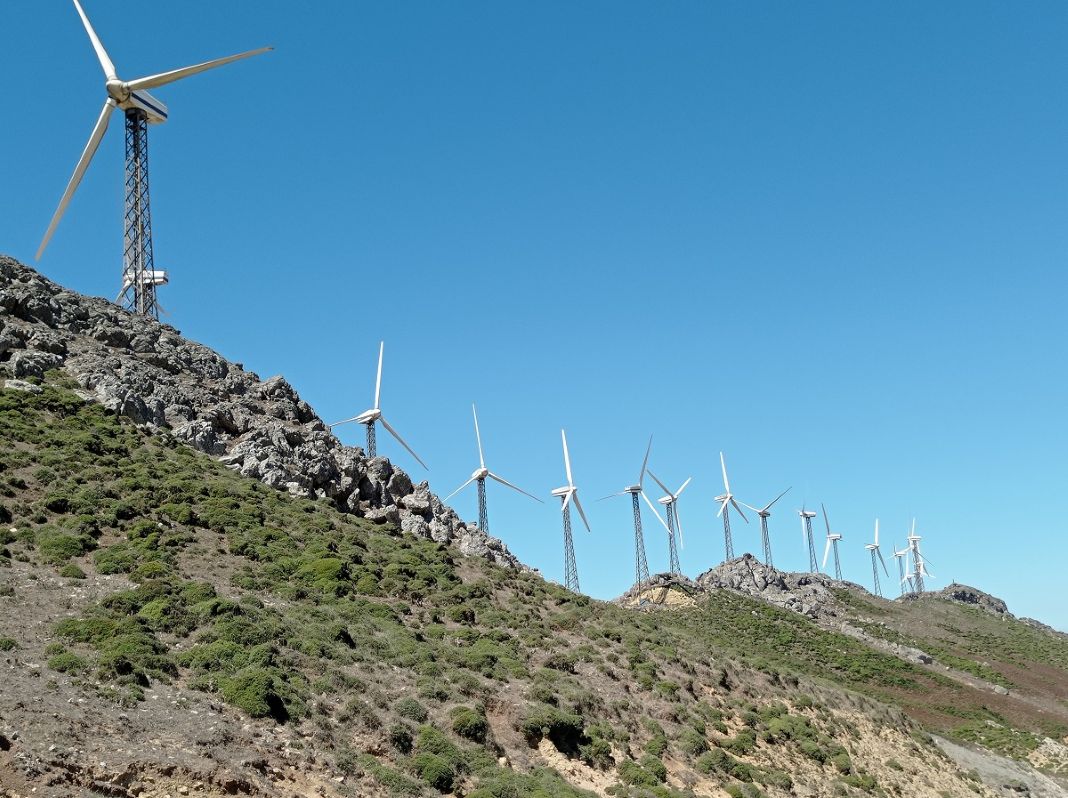
There are consequence for not investing in energy. Firstly, there is deforestation, which is creating a huge problem in terms of food security. We have taken renewable energy as a focus area for ourselves. We believe that we can have a positive impact by supporting companies, entities and clients of ours that are invested in making sure that we transition Africa to a renewable energy source. We are also heavily involved in supporting governments as they continue to improve generation capacity, resilience and increased footprint for the transmission infrastructure.
Our strategic partnership with the Industrial and Commercial Bank of China (ICBC) has also helped a lot in terms of accessing some of the manufactured components that are part of that particular trajectory. Energy transformation for Africa is absolutely critical because if we don’t solve that you cannot solve manufacturing and you cannot solve value addition.
We have seen an improvement. South Africa has made a significant improvement in energy reliability. Whether or not it is sufficient depends on who you speak to, but we have seen an improvement across the continent in general.
Looking at coverage, the SADC Power Pool is now accessing renewable energy from independent power producers (IPPs). We have also seen the emergence of power traders that are helping harness all the smaller IPPs and pumping that capacity onto the national grids. This has certainly improved a lot.
I visited a client in Zambia recently and heard about their energy statistics. They were able to reduce the cost of power by about 50% by blending the excess power that IPPs were producing with power from the grid.
The second benefit they got out of that was more reliable power. If you are running a manufacturing plant, you don’t want outages. Yes, these are small gains, small steps, and it is never going to replace a smelter, but we are rebuilding. But we are building the infrastructure that is required for power generation, transmission and ultimately distribution for the benefit of industry. There has been a significant improvement.
Are planners, government or otherwise, alive to the critical link between being able to beneficiate and having reliable cheap electricity?
I have spent the better part of the last two decades working purely across markets to the north of South Africa. It is a fact that you have governments changing, but one thing is consistent within almost every single country that I have seen: power generation, reliable and affordable power supply are seen as central enablers for economic growth. This is true right across the continent. And in that consistency, whether or not there is a government change, that marks a shift.
There is also the fact that you are not seeing as much damage to infrastructure where people are just damaging infrastructure because of wars. The guns have been significantly silenced so we are seeing a lot more work being done in making transmission and energy infrastructure a lot more resilient, for example in surviving extreme weather conditions.
So it is a continental priority?
Yes, definitely. I can speak for most of the places where I speak to key regulators. Whether it is the governance of central banks, ministers of finance or ministers of energy, the message is very consistent.
Are there particular sectors outside of energy and infrastructure that you see as growth drivers?
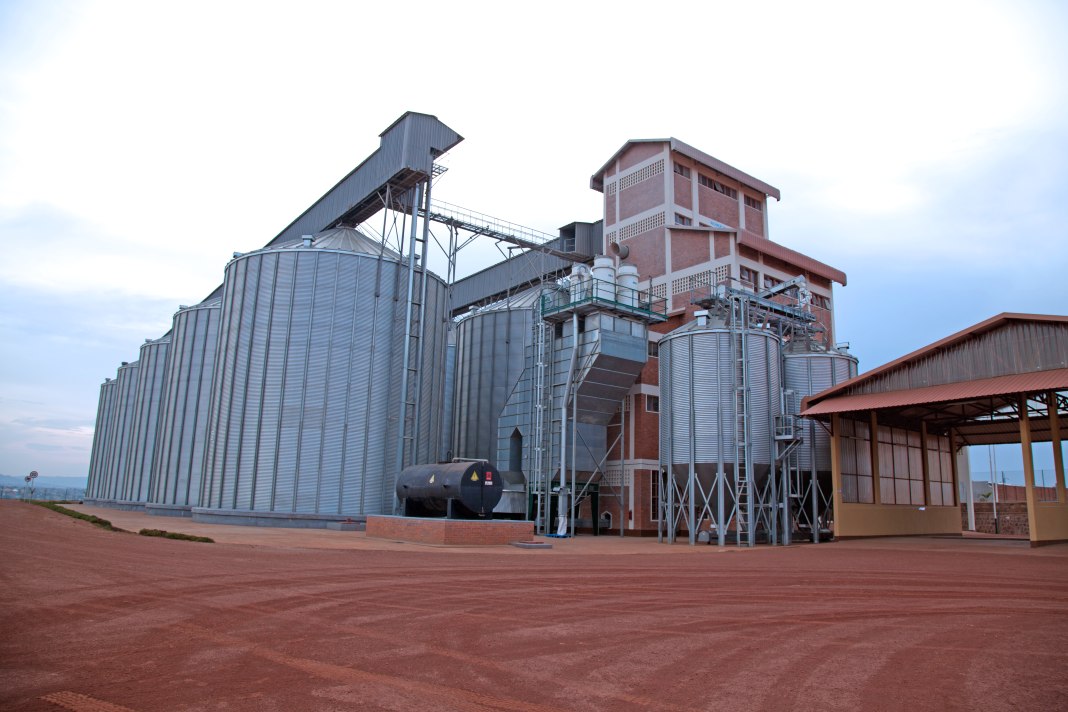
There are two main ones. The first one is the whole ecosystem around agriculture, from the smallholding farmer to the aggregator and on to the agro-processor. Plants to process edible oils are going up everywhere, so we are doing a lot of funding, also processing of maize into maizemeal.
We are also beginning to see a lot more industries coming up around fresh produce. That includes investment in the cold chain and improving post-harvest handling so that the fresh produce coming from the farms has better longevity. Cold rooms are be being constructed and we are seeing our clients coming to us to come for financing refrigerated trucks to make sure that the produce actually makes it to the market.
We are seeing these industries coming in from almost primary agricultural production at a farm level, working their way all the way to your dining-room table.
Secondly – outside of infrastructure – is the digital revolution that is taking place. There has been huge investment in sub-terrestrial data cables. There are western and eastern cables, and some that are cutting across Africa. Africa has realised that it can only grow if we are part of the digital revolution that is taking place across the world.
This investment in infrastructure has also created young tech entrepreneurs in the payment space where thinktanks play a role. That thinktank revolution – the technology revolution – is being led by young people and they can only thrive if they have access to a reliable supply of data.
And that data supply sits on the back of the energy infrastructure we talked about earlier?
Absolutely, and then you also have Kenya as a major investor in that space. Nigeria is also coming to the fore on that front.