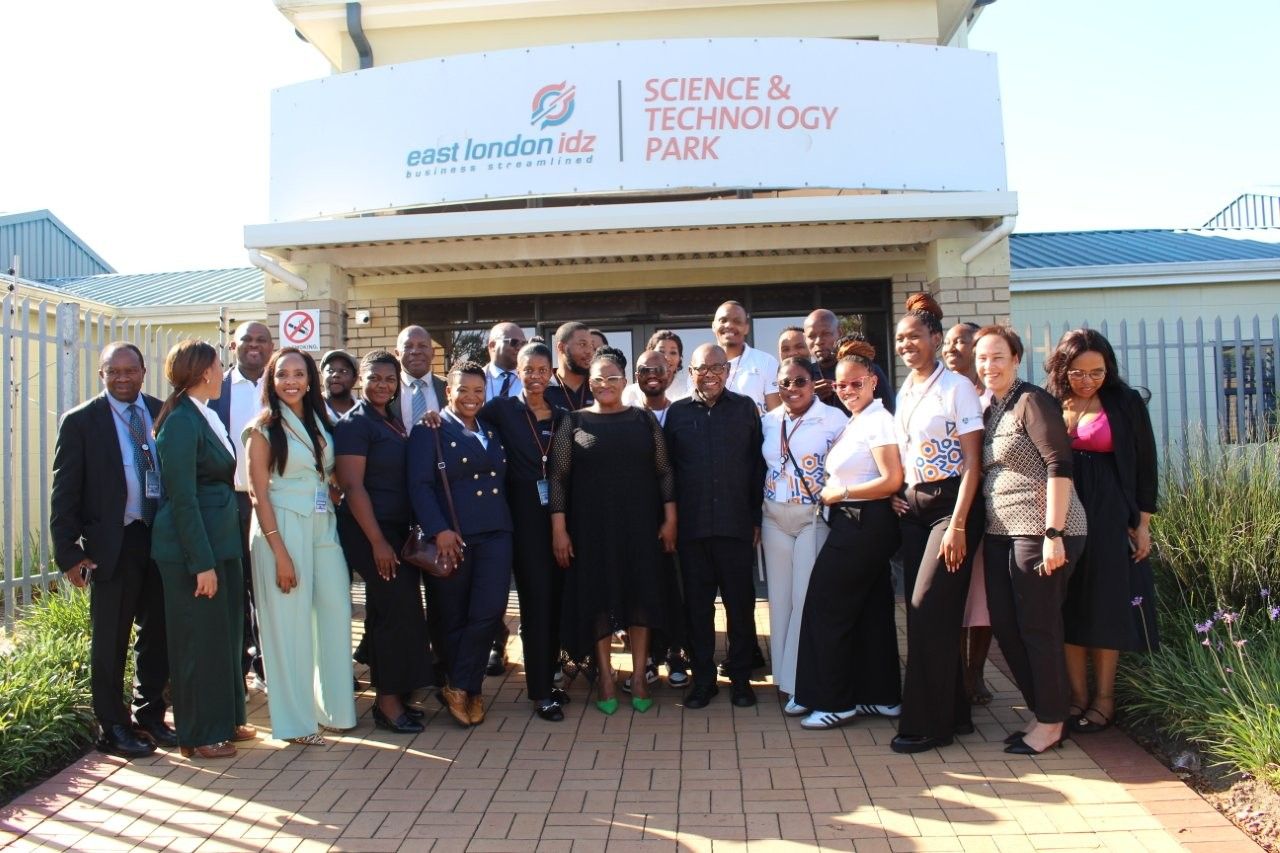
The East London Industrial Development Zone (ELIDZ) hosted Minister of Science, Technology and Innovation, Professor Blade Nzimande, at its Science and Technology Park (STP) on 16 October 2026, showcasing how innovation, enterprise development and technical skills are supporting industrial growth and competitiveness in the Eastern Cape.
The strategic engagement and site visit brought together government, industry, academia and development partners to consider how closer collaboration can help local enterprises develop products, strengthen manufacturing capabilities and participate in industrial value chains.
The visit formed part of the Ministry’s programme to strengthen relationships with Special Economic Zones and industry, following engagements at the Sci-Bono Discovery Centre in Johannesburg, SASOL in Sasolburg and Coega in Gqeberha.
Established in 2014, the ELIDZ STP is South Africa’s first and only Science and Technology Park fully integrated within a Special Economic Zone. It brings innovation support, technical skills, enterprise incubation and industrial activity together within a single precinct.
This integration connects entrepreneurs and researchers with the needs of established businesses. It provides a setting in which ideas can be developed, products tested and emerging suppliers supported to meet industry requirements, while investors gain access to technical expertise and opportunities to work with local enterprises.
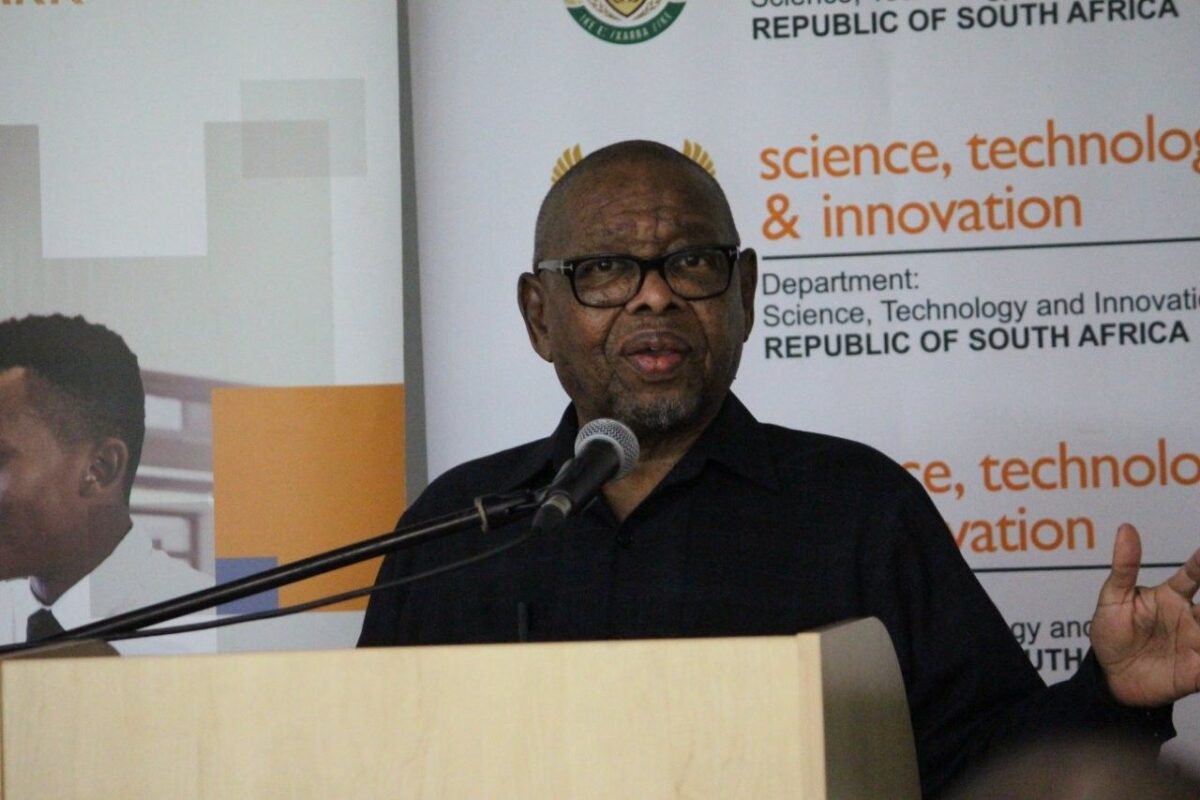
Minister Nzimande described the ELIDZ as both an industrial and an innovation platform, supporting globally competitive manufacturers while providing laboratories, training, incubation and technical problem-solving through its STP.
“The ELIDZ provides us with the unique opportunity to connect the province’s industrial and knowledge bases: investors with local suppliers, researchers with manufacturers, innovators with prototyping facilities, TVET colleges with workplace learning, and public investment with productive outcomes,” said Nzimande.
He emphasised that Special Economic Zones have an important role in accelerating technology adoption, localisation and the conversion of research into economic value. Their performance should also be reflected in higher productivity, stronger suppliers, patents, prototypes, new products and services, relevant skills and improved competitiveness.
The Minister proposed consolidating the existing regional innovation forum into a science, technology and innovation forum for Buffalo City. He said such a forum could help coordinate institutions, identify challenges requiring innovative solutions and connect those challenges with the relevant expertise. He called for stronger cooperation among government, universities, TVET colleges, science councils, industry, investors and communities, guided by shared priorities and measurable outcomes.
Highlighting the Eastern Cape’s automotive manufacturing base, Nzimande identified Mercedes-Benz South Africa, the ELIDZ Automotive Supplier Park, component manufacturers and the Port of East London as a foundation for developing a more technologically advanced and locally integrated automotive industry.
He called for support to help local suppliers adopt advanced manufacturing technologies, automation, robotics, artificial intelligence and digital production systems, alongside stronger research, engineering and workforce capabilities.
The transition towards electric and other new energy vehicles, sustainable materials and circular manufacturing also presents opportunities for new products, services and enterprises. Nzimande said collaboration between industry, the STP, educational institutions, science councils and the Technology Innovation Agency (TIA) could help local innovators participate in these evolving value chains.
“Our ambition must be to ensure that more of the knowledge, capabilities, value, and employment generated by this industry are retained and expanded within the Eastern Cape,” he said.
These priorities align with the ELIDZ’s approach to connecting investment attraction with innovation, skills and supplier development. Through its Design Centre, Consulting and Analytical Services Laboratory, Manufacturing Incubator, Renewable Energy Centre and partner programmes, the STP provides specialised facilities and expertise that support enterprise growth and industrial activity.
Design and prototyping help businesses refine products and components before committing to production. Laboratory services support testing, quality assurance and compliance, while incubation and technical training help emerging enterprises improve their operations and prepare to supply established industries.
These capabilities support the ELIDZ’s sector development work across automotive, advanced manufacturing, agri-industry, aquaculture, sustainable energy, logistics and the digital economy. They help connect the requirements of investors with the development of local businesses and skills, strengthening the industrial offering of the precinct.
ELIDZ Board Chairperson, Mr Ayanda Kanana, said the visit reflected the organisation’s ambition to deepen collaboration with the Department of Science, Technology and Innovation as it develops the Zone into a single industrial innovation precinct.
He emphasised that the institution’s impact must be evident in the growth of businesses, meaningful employment and opportunities for young people to develop, own and commercialise technology.
“Our task is not simply to prepare young South Africans for the jobs of the future. It is to empower them to create the industries, technologies, opportunities that will define that future,” said Kanana.
He called for stronger connections between knowledge produced by universities and TVET colleges, the creativity of young people and the practical needs of industry. He stressed that infrastructure, programmes and partnerships must ultimately translate into improvements in people’s lives.
Delivering the provincial message of support, Eastern Cape MEC for Economic Development,
Environmental Affairs and Tourism, Ms Nonkqubela Pieters, reaffirmed the province’s commitment to integrating innovation into industrialisation.
“This is why, as a province, we have always been intentional about integrating innovation into industrialisation. We recognise that growing our industrial economy requires us to develop and apply new ideas, technologies and skills,” said Pieters.
She highlighted the importance of building on the province’s automotive manufacturing strengths while developing opportunities in agri-industry, aquaculture, sustainable energy, advanced manufacturing and logistics.
Pieters emphasised that investment must be accompanied by the development of local skills and enterprises so that more of its benefits remain within the province. Access to design, prototyping, testing and incubation helps businesses meet quality requirements, deliver consistently and compete for opportunities in industrial supply chains.
She also called for cooperation to extend these services to smaller towns and rural communities, particularly for young people, women and emerging businesses facing barriers to equipment, expertise and industry networks.
Welcoming the Minister to Buffalo City, the MMC for Finance, Mr Yomelela Tyali, standing in for the Executive Mayor, emphasised that innovation must create practical benefits for communities, including opportunities for young people, broader economic participation and improved municipal services.
“For us, innovation is not simply about technology. It is about achieving better outcomes for people,” said Tyali.
She highlighted the need for partnerships that enable township, rural and historically disadvantaged communities to participate in the opportunities created by technological progress.

The ELIDZ also shared progress in its enterprise and skills development programmes. The STP currently supports more than 71 enterprises through incubation, business development and industry support programmes, while more than 523 entrepreneurs have benefited from enterprise development initiatives and incubation partnerships.
Since the 2019/20 financial year, 2,166 beneficiaries have received training through technical and industry-related programmes. This includes 602 participants during 2025/26 and a further 178 during the first quarter of 2026/27.
The Design Centre has developed 33 product prototypes, while more than 300 entrepreneurs have received intellectual property and innovation-related support. A further 37 digital enterprises have been incubated through the ELIDZ Digital Hub across the Eastern Cape.
These interventions support entrepreneurs at different stages, from developing an idea and testing a prototype to protecting intellectual property and preparing for commercial opportunities.
Philiswa Sotenjwa of Zonzaba Naturals, an agro-processing company specialising in hair care products, expressed appreciation for the ongoing support received from the ELIDZ, highlighting its value in strengthening the business’s visibility and access to potential funders.
Siphelo Ntozini of SpatialQinetics AI, a company developing an AI-based energy analysis product, welcomed the ongoing support provided by the ELIDZ, recognising its role in enabling the business to advance its product development.
Minister Nzimande acknowledged the Department’s longstanding support for the ELIDZ, including funding for the feasibility study that led to the establishment of the STP. He also highlighted a bio-entrepreneurship pilot intended to help emerging enterprises convert locally available hemp and cannabis biomass into higher-value biomaterials and biochemicals.
He emphasised that the benefits of innovation-led industrialisation must extend beyond the Zone into Buffalo City, Mdantsane, surrounding towns and the wider provincial economy, opening opportunities for small enterprises, township and rural innovators, women-owned businesses and young people.
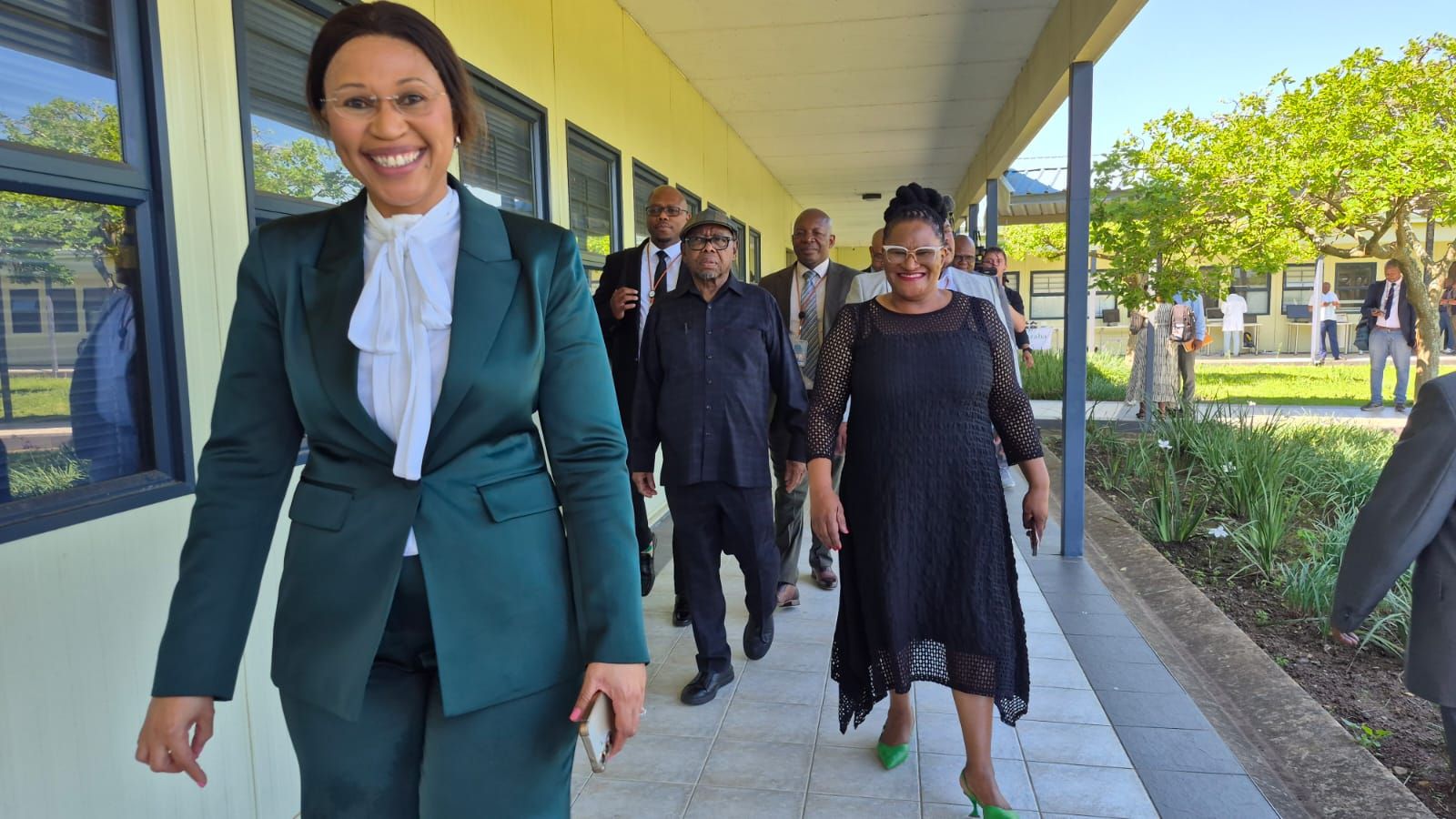
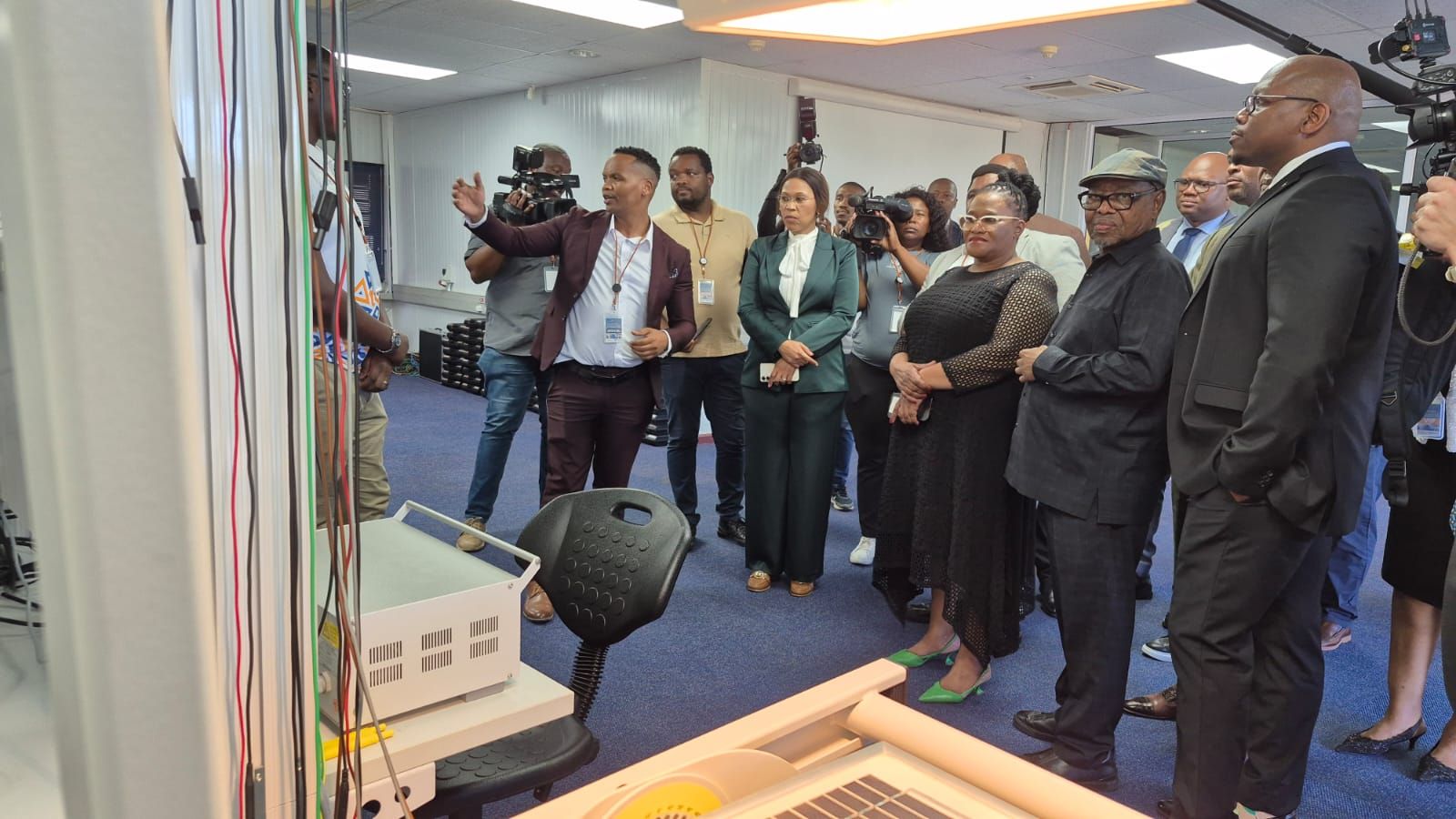
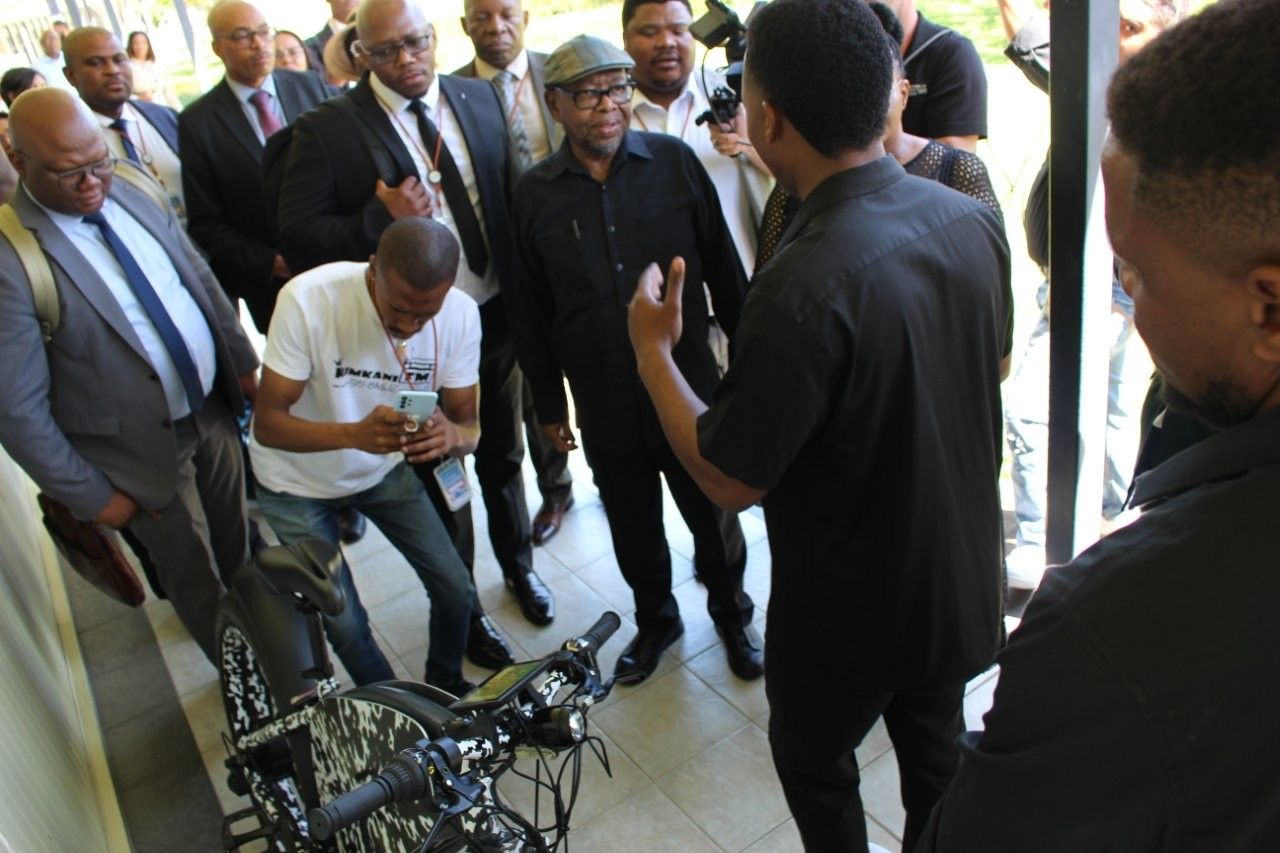
The visit included a guided tour of the STP facilities, led by STP Head Ms Ludwe Macingwane. The tour gave the delegation first-hand insight into the infrastructure and technical support available to entrepreneurs and industry, demonstrating how these services connect with the ELIDZ’s broader industrial development work.
By bringing investment, industrial infrastructure, innovation services, enterprise development and skills together within one precinct, the ELIDZ is working to strengthen local industrial capabilities and help more Eastern Cape businesses participate in competitive markets.