By Felix Spies, CEO of the Siyafunda Education Foundation.
One of the most urgent questions facing South Africa is not only whether young people are being educated, but whether they are being prepared for the world they are about to enter.
For decades, education systems have been built around a relatively stable idea of work. Learners studied content, progressed through grades, entered tertiary pathways or vocational training and then moved into jobs that were broadly understood. That world is changing. Artificial intelligence, automation, digital platforms and new forms of work are reshaping industries at a speed that makes it difficult to predict what many future careers will look like.

This creates both a challenge and an opportunity. The challenge is that young people cannot be prepared for the future through content knowledge alone. The opportunity is that South Africa can rethink what meaningful education should develop: adaptability, curiosity, problem-solving, digital confidence and the ability to keep learning.
This is especially important in rural and underserved communities. When learners are excluded from future-facing education, they are not only left behind academically. They are pushed further away from economic opportunity. The digital divide is therefore not just about access to devices or connectivity. It is about access to the kinds of learning experiences that help young people imagine, understand and participate in a changing economy.
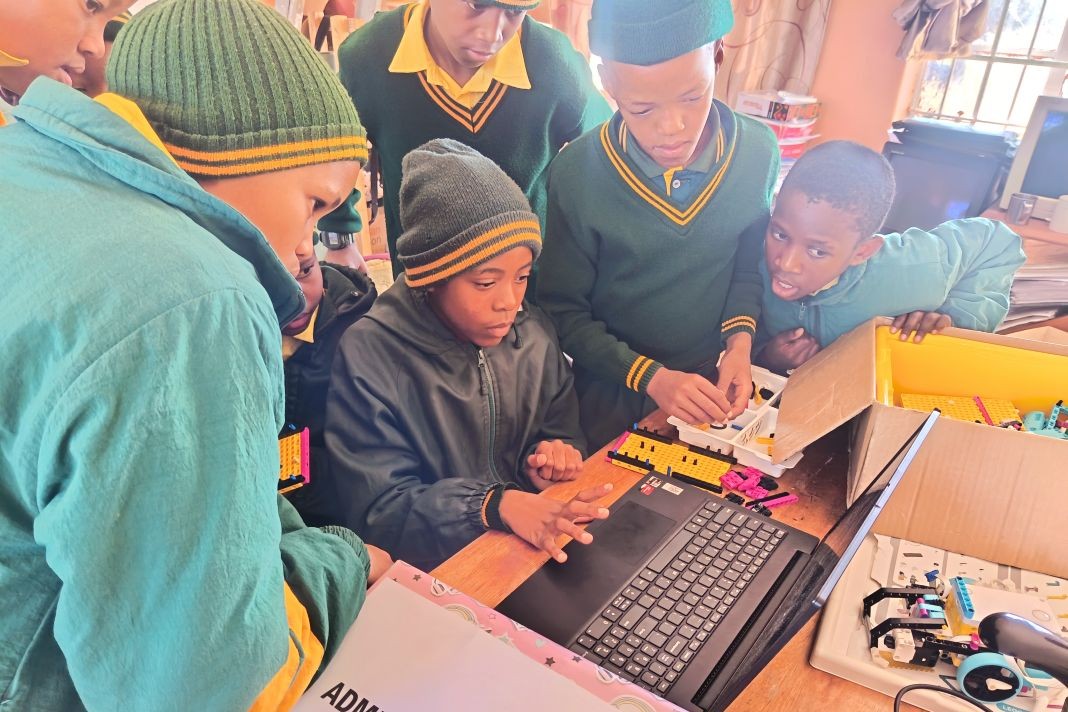
This is where Coding and Robotics becomes important, but is often misunderstood. The subject’s value is not only that children learn how to code. Very few learners will become software developers, robotics engineers or AI specialists. The deeper value is that learners begin to understand how systems work. They learn to break problems into smaller parts, test ideas, make mistakes, adjust their thinking and try again.
In other words, Coding and Robotics is not simply a technology subject. It is a thinking subject.
When a learner builds a robot and it does not move as expected, the lesson is not failure. The lesson is iteration. What instruction was unclear? Which sensor did not respond? What assumption was wrong? This process develops resilience, logic and confidence. These are precisely the qualities that future workplaces will require.
Coding and Robotics is not simply a technology subject. It is a thinking subject.
The same applies to artificial intelligence. AI is often discussed in dramatic terms, either as a threat that will replace people or as a miracle that will solve complex problems. The reality is more nuanced. AI is not one thing. It is a set of tools and capabilities that will affect different sectors in different ways. Some tasks will disappear, some will change, and entirely new kinds of work will emerge.
For young people, the most important preparation is not to memorise how one tool works today. It is to develop the confidence and judgement to work with new tools tomorrow. That requires strong foundations in literacy and numeracy, but also exposure to computational thinking, creativity, collaboration and ethical decision-making.
Business has a stake
Business has a direct stake in this conversation. Companies cannot speak about future talent pipelines while ignoring the educational conditions that shape those pipelines. If industries require adaptable, digitally confident and problem-solving employees, then social investment must move beyond once-off donations and short-term interventions. It must support structured pathways that begin early and continue over time.
This requires a shift in how we think about corporate social investment and education partnerships. A once-off computer lab may provide access, but access alone does not create capability. A workshop may inspire interest, but inspiration without continuity rarely becomes competence. Real impact comes from sustained exposure, teacher support, curriculum alignment and ongoing mentorship.
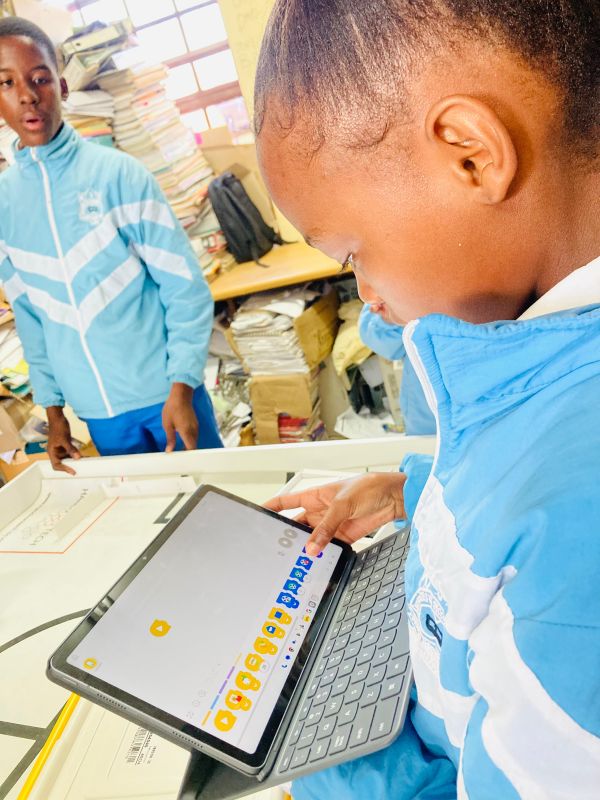
At the Siyafunda Education Foundation, our work in rural STEM education has shown that learners do not lack potential. What they often lack is access to the right platforms, tools and support systems. When those are provided consistently, learners who may never have seen themselves as “technology people” begin to engage with complex problems, build confidence and see new possibilities for their futures.
Teachers are central to this process. Too often, technology programmes focus on learners while underestimating the role of educators. Yet a confident teacher can multiply impact far beyond a single intervention. If teachers are supported to understand Coding and Robotics, integrate it into classroom practice and guide learners through problem-solving activities, the programme becomes embedded in the school rather than dependent on an external provider.
This is particularly important as South Africa moves towards broader implementation of Coding and Robotics in the curriculum. Policy direction matters, but implementation will determine success. Schools need resources, yes, but they also need training, follow-up support, practical lesson models and confidence-building for educators. Without this,
the curriculum risks becoming another well-intended reform that is unevenly experienced across the country.
The question, then, is not whether every child must become a coder. The question is whether every child should have the opportunity to develop the type of thinking that makes them adaptable in a changing world. The answer must be yes.
Future jobs will not reward young people simply for what they know. They will reward those who can learn, unlearn and relearn. They will reward those who can work with technology rather than fear it. They will reward those who can solve unfamiliar problems with confidence and creativity.
Invest in capabilities for growth
South Africa’s education challenge is therefore also an economic challenge. If we want inclusive growth, we must invest in the capabilities that allow young people from all communities to participate in the future economy. This cannot be reserved for well-resourced schools or urban centres. Rural learners must be part of the country’s innovation story.
Future jobs will not reward young people simply for what they know. They will reward those who can learn, unlearn and relearn.
Educating for jobs that do not yet exist means preparing young people not for a fixed destination, but for a changing landscape. It means giving them the tools to think, adapt and contribute. It means recognising that the future of work does not begin in boardrooms or policy documents. It begins in classrooms, in school halls, in robotics clubs, in teacher-training sessions and in every moment where a learner discovers that they can solve a problem they once thought was beyond them.
That is the real promise of future-facing education. Not technology for its own sake, but technology as a bridge to confidence, capability and opportunity.