
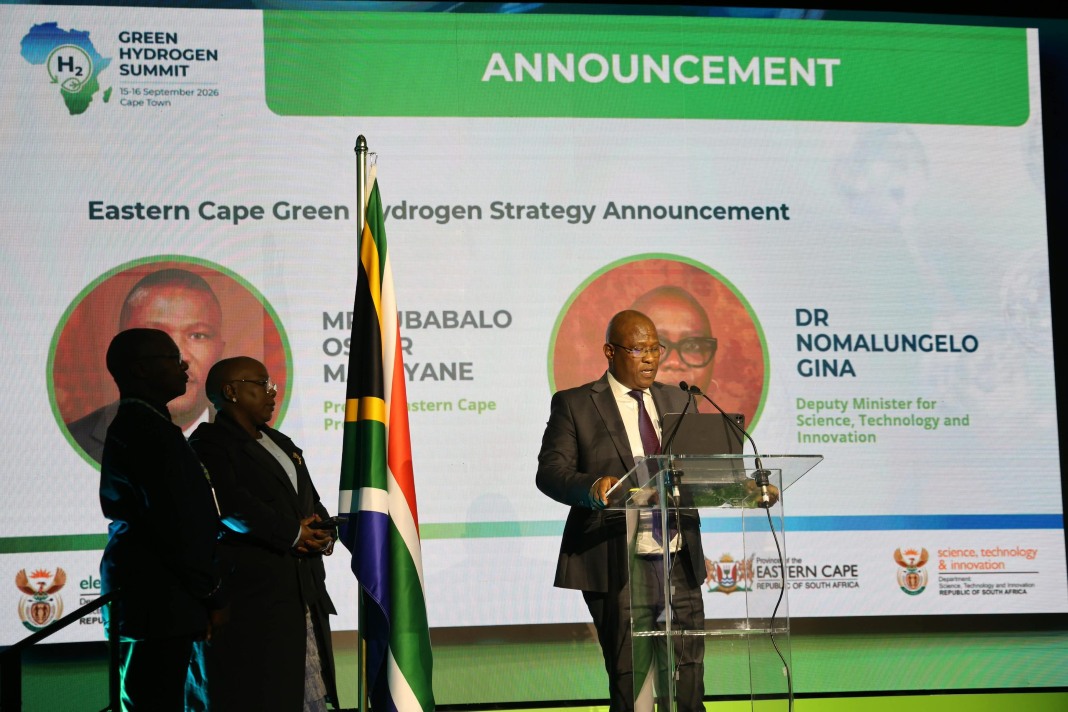
The Eastern Cape has unveiled its Green Hydrogen Strategy at the African Green Hydrogen Summit (AGHS) 2026 in Cape Town, setting out how the province intends to leverage its renewable-energy and industrial advantages to attract investment, develop new industries, create jobs and strengthen its position in the emerging global green economy.
The Strategy is the product of collaboration between the Eastern Cape Department of Economic Development, Environmental Affairs and Tourism (DEDEAT), the Department of Science, Technology and Innovation (DSTI), the South African National Energy Development Institute (SANEDI) and Nelson Mandela University (NMU). The partnership brings together government, technical expertise and academic knowledge to support a coordinated approach to green hydrogen development in the province.
Adopted by the Eastern Cape Provincial Executive Council for resourcing and implementation, the Strategy provides the province’s roadmap for building a competitive green hydrogen economy while supporting the continued competitiveness of existing industries. The summit brings together government, investors, industry, development partners and researchers to advance collaboration and investment in the sector.
“Green hydrogen production, export and utilisation represent both a substantial economic opportunity and a strategic priority for the Eastern Cape,” says Premier Lubabalo Oscar Mabuyane.
“The Strategy is ultimately about using green hydrogen as a catalyst for industrialisation, economic growth and long-term regional competitiveness. It gives us a roadmap to attract investment, deepen value chains, support localisation and skills development, and ensure that our existing automotive, manufacturing and export industries remain competitive as global markets transition to lower-carbon production,” adds Mabuyane.
The Eastern Cape’s renewable-energy resources, Special Economic Zones (SEZs), deep-water ports, skills base and export manufacturing capability provide a strong platform from which to develop the sector.
“Our SEZs, Coega and East London IDZ, are critical platforms in this process because they bring together industrial infrastructure, logistics, investment support, skills and access to global markets. By connecting these platforms with our renewable-energy resources, ports, infrastructure and regional partners, we can move beyond simply producing green hydrogen to building new industries, new capabilities and new economic opportunities for the Eastern Cape,” says Eastern Cape Department of Economic Development, Environmental Affairs and Tourism MEC, Ms Nonkqubela Pieters.
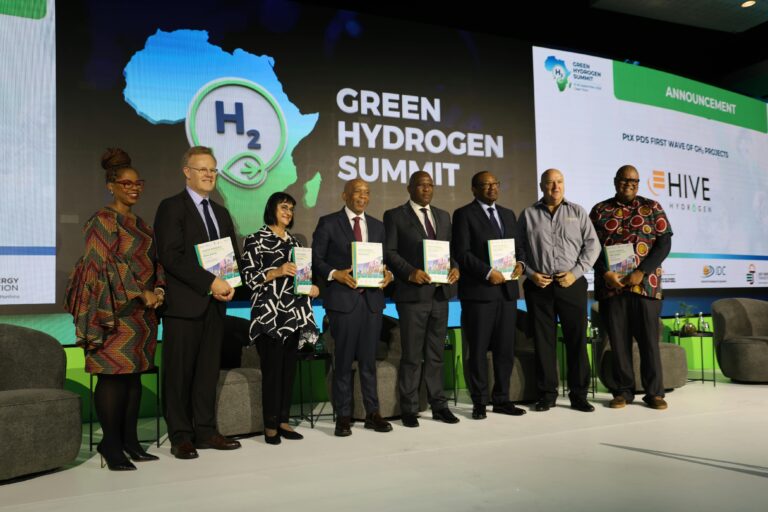
East London IDZ Chief Executive Officer, Mr Thembela Zweni, says the province’s Green Hydrogen Strategy and its participation in the African Green Hydrogen Summit provide an important platform for the ELIDZ to reinforce its role as a practical industrial partner in translating the Eastern Cape’s green hydrogen ambitions into bankable investment opportunities.
“Green hydrogen must be advanced as a catalyst for industrialisation, investment attraction and long-term competitiveness. This is not merely an energy conversation; it is a significant industrial development opportunity. Through our Special Economic Zone / Industrial platform, established manufacturing base, logistics linkages and investor support capabilities, the ELIDZ is well positioned to help anchor and grow the green hydrogen economy,” says Zweni.
The Eastern Cape has more than 2.4 Gigawatts of renewable-energy projects operational or under construction and a renewable-energy pipeline exceeding 10 Gigawatts. The ports of Ngqura and East London, Coega SEZ and East London IDZ, together with an established automotive and manufacturing base, provide industrial and export infrastructure close to potential production sites.
These advantages are further strengthened through the Three Capes cooperation with the Western and Northern Cape. Linking renewable-energy resources, ports, industrial platforms, transmission infrastructure and logistics corridors can create greater scale, integrated value chains and a stronger proposition for investors.
The Strategy’s focus is now on converting these advantages into viable projects and broad-based economic benefits. Anchor green hydrogen projects at Coega and the East London IDZ have been designated national strategic integrated projects, providing an early platform for investment and commercial development.
Implementation is structured in three phases: establishing the sector and enabling conditions to 2030; scaling production, industry and skills from 2030 to 2040; and developing a mature, internationally competitive green hydrogen economy integrated into global low-carbon value chains from 2040 to 2050.
Five linked priorities will drive delivery:
- Infrastructure and logistics will connect renewable power to production sites and markets through grid, water, storage, road, rail and port investment.
- An enabling environment will focus on coordinated institutions, predictable approvals, policy alignment and international certification.
- Investment and finance will mobilise private capital, development finance, climate finance and strategic partnerships.
- Skills and knowledge will align universities, TVET colleges, research institutions and industry with emerging technical and operational needs.
- Localisation and innovation will build local suppliers, enterprises, research capability and downstream industries so that more value is retained in the province.
The Strategy makes it clear that government cannot build the sector alone. The public sector will coordinate infrastructure, spatial and municipal planning, improve the investment environment, build institutional and skills capacity and help reduce project risk.
Commercial projects will depend primarily on private-sector and development-finance investment, technology and market access.
Nelson Mandela Bay and Buffalo City are identified as emerging green industrial hubs. Delivery will require collaboration across government, municipalities, state-owned companies, investors, industry, universities, TVET colleges, labour and communities.
Success will be measured not only by investment and production, but by local skills development, supplier development, enterprise growth and participation by Eastern Cape workers, businesses and communities.
The Strategy therefore positions green hydrogen not simply as a new energy opportunity, but as a potential catalyst for industrial development, investment, localisation and inclusive economic growth. It provides a common framework for aligning the province’s infrastructure, institutions, industries and partnerships to position the Eastern Cape for long-term participation in emerging global low-carbon value chains.