In the time since President Donald Trump became US president, there has been something of a backlash against ESG in some parts of the world. Is this something you have noticed?
The backlash is real, but it’s largely a US political story. What I see in practice – across South Africa, West Africa and Europe – is something quite different: companies are still being asked hard questions by their trading partners, their lenders and their customers. The EU’s Corporate Sustainability Due Diligence Directive and the EU Deforestation Regulation aren’t going away. If anything, the noise from Washington has sharpened the focus in Brussels.
In South Africa, the conversation has never really been ideological – it’s been about compliance, risk and, increasingly, market access. Businesses here understand that ESG is a condition of trade, not a political position. It will absolutely reassert itself globally, because the underlying risks – climate, labour and human rights – haven’t gone anywhere.
From South Africa to Amsterdam, via Nigeria: how has your journey prepared you for running EcoIQ?
Living and working cross Africa and Europe gave me something you don’t get by doing an MBA; it gave me the ability to hold complexity, think on my feet and taught me the power of networks and collaboration. I’ve managed supply chains where the infrastructure is unreliable, the regulatory environment is shifting and the human stakes are very high. I understand both the multinational buyers trying to meet their due-diligence obligations, and the supplier on the ground navigating those requirements for the first time. I’ve sat at both ends of that table.
What was the spark that caused you to establish EcoIQ?
I kept seeing companies spend enormous energy on ESG assessments that produced beautiful reports but didn’t actually change anything on the ground. Suppliers were being asked the same questions repeatedly by different buyers, with no benefit flowing back to them. I wanted to build something that was genuinely useful – to the buyer who needs to prove compliance and to the supplier who needs to improve. Mostly I saw what impact it can make in people’s lives when organisations get it right.
What is EcoIQ’s unique selling proposition?
We’re an agentic AI platform purpose-built for supply-chain ESG assessment and human rights due diligence. What makes us different is that we don’t just flag risk – we guide remediation and we generate the evidence trail that regulators and investors increasingly require. We also achieve supplier-engagement rates that are well above industry norms.
Our anchor client, Ivanhoe Mines, validated a 65% supplier-engagement rate (double the average for these kinds of assessments), which was recognised in their 2025 Sustainability Report. That’s the metric that matters – a tool that suppliers actually use.
Are there elements of the ESG equation that are unique to South Africa?
Absolutely. B-BBEE sits at the heart of any serious supply chain conversation here – it’s not peripheral, it’s foundational. Labour-brokering practices, the prevalence of informal work and the legacy of structural inequality mean that the human rights dimension of due diligence has very particular textures in the South African context.
We’ve built those realities into our platform, which is part of why we’ve been able to win enterprise contracts against much larger global competitors.
Biography
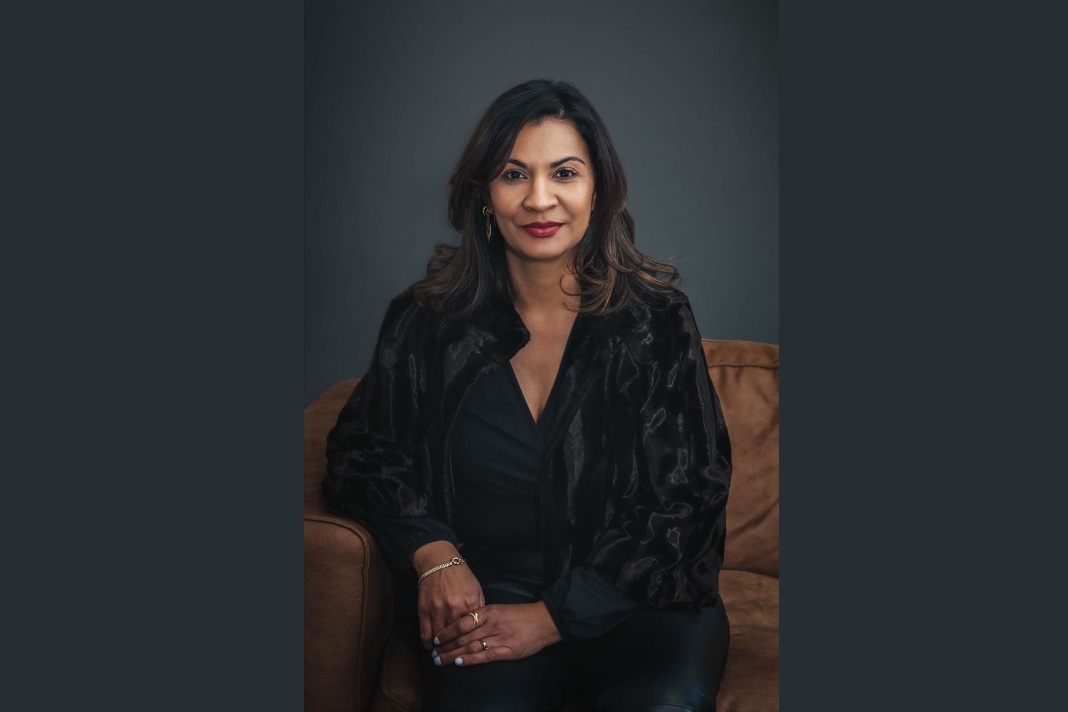
Karen Daniels is Founder and CEO of EcoIQ, an agentic AI platform for supply chain ESG assessment and human rights due diligence. Over a 20-year career spanning Heineken, Diageo, Shell and Nigerian Breweries across 32 countries, she developed deep expertise in the intersection of global operations and corporate sustainability.
Based in Cape Town, Karen combines international business acumen with a commitment to practical, ground-level impact – building tools that don’t just assess risk but drive real change.
EcoIQ: Turning supply chain risk into proof of progress
Operating under the tagline Find it. Fix it. Prove it., EcoIQ is an agentic AI platform purpose-built for supply chain ESG assessment and human rights due diligence (HRDD). EcoIQ exists to close the gap between corporate sustainability commitments and what is actually happening on the ground – in mines, factories, farms and logistics networks across some of the world’s most complex operating environments.
The company was founded by Karen Daniels, a supply-chain leader with over 20 years of senior experience across Heineken, Diageo, Shell and Nigerian Breweries, spanning 32 countries across Africa, Asia-Pacific and Europe. Before embarking on her international career, Karen also held the position of Chief Procurement Officer for the National Ports Authority of South Africa, where she was involved in delivering the Port of Ngqura – one of the most significant infrastructure projects in the country’s post-apartheid history. It is a career built not in boardrooms alone, but in the operational reality of global supply chains: where infrastructure is unreliable, regulatory environments shift without warning and the human stakes are high.
That experience shaped EcoIQ’s founding philosophy. Karen watched multinational companies pour resources into ESG assessments that generated polished reports but produced little change on the ground. Suppliers were surveyed repeatedly by different buyers, with no feedback, no support and no improvement. The tools that existed were built for compliance optics – not for remediation, not for the supplier and not for the kind of independent verification that regulators and investors are increasingly demanding.
EcoIQ was built to be different. The platform architecture is built to guide buyers and suppliers through the full due diligence lifecycle: identifying risk, prioritising remediation, tracking corrective action and generating the evidence trail required under frameworks including the EU Corporate Sustainability Due Diligence Directive (CS3D), the EU Deforestation Regulation (EUDR) and emerging human rights due diligence legislation across multiple jurisdictions. Where other platforms stop at the questionnaire, EcoIQ continues through to verified proof.
The results speak for themselves. EcoIQ’s anchor client, Ivanhoe Mines, achieved a 65% supplier engagement rate across its operations – outperforming global benchmarks and earning recognition in Ivanhoe’s 2025 Sustainability Report. In 2026, EcoIQ, through one of its South African affiliates, B1SA (B1LINK), was awarded a multi-year enterprise contract with Telkom SA, beating out established global competitors.
Headquartered in the Netherlands as EcoIQ BV, with its operational base in South Africa, EcoIQ is positioned at the intersection of two of the world’s most important ESG regulatory environments. South Africa’s B-BBEE framework, the prevalence of informal and brokered labour and the structural realities of post-apartheid inequality give the human-rights dimension of supply chain due diligence a particular texture here – one that EcoIQ has built directly into its platform methodology and that sets it apart from tools designed primarily for European or North American markets.
EcoIQ’s work spans mining, telecommunications, food and agriculture, and manufacturing. Its growing client and prospect base includes major players across Southern and West Africa, with an expanding footprint in Europe as EUDR and CS3D obligations begin to bite. The company is currently completing its Series A funding round to accelerate platform development, expand its practitioner partner network and bring its Worker Voice Module – an SMS and WhatsApp-based grievance and feedback tool – into full production.
Karen Daniels founded EcoIQ with a clear-eyed belief that the market did not need another tick-box compliance tool. It needed something built by someone who had lived on both sides of the supply chain – who understood what buyers require, what suppliers can actually deliver and where the gap between the two creates real human risk.
EcoIQ is that something.
Website: https://eco-iq.com/