What is the mandate of the TAG?
TAG is mandated to drive integrated transport planning that supports the development of an efficient, connected and sustainable transport system across the province. Furthermore, it’s to promote a cohesive and modern mobility ecosystem as we strive to align with best practices. We are driven by supporting economic growth and accessibility and we also are entrusted with developing an integrated and accessible public transport network that connects various transport modes, including rail, bus and taxi services. When Gauteng thrives, the entire country prospers.
To whom do you report?
As CEO, I report to the board through the board chairperson and the board reports to the Gauteng Member of the Executive Council (MEC) for Roads and Transport.
Are there challenges faced by regulators and operators?
All regulators are grappling with a myriad of challenges including a culture of non-compliance, adaptability to new technologies and legislation, inadequate budget allocations, the misalignment of institutional mandates and the need to address barriers to entry of new players.
Are there challenges that are particular to your province?
What is unique to Gauteng is that people are attracted to the province in large numbers which puts a lot of strain on the transport system. Instead of development following transport networks, we tend to follow where development is taking place. We have to grapple with congestion on roads and the greenhouse-gas emissions that are created. The through-traffic of freight trucks also has a negative impact on road infrastructure.
That is quite a daunting set of challenges.
For me, it’s an opportunity to continue working and transforming the entire transport system. My mind doesn’t stop exploring what other countries are doing. How best can we be innovative? We need to be adaptable and efficient.
Are there particular models that inspired you?
France and Amsterdam inspired me and the Berlin transport system is seamless. It’s crisp and it’s clear and that’s what we want to bring to Gauteng.
Does development along prescribed corridors play a role in planning in Gauteng?
That is a very pertinent question. Access Gauteng 2050 vision seeks to connect people, places and opportunities sustainably. The Gauteng Department of Roads and Transport’s vision seeks to develop an integrated, sustainable infrastructure that promotes people-centred, innovative and accessible, safe and affordable movement of people, goods and services.
Access Gauteng 2050 brings to the fore the sustainability element. The province’s broader vision is of a liveable, equitable, inclusive and united Gauteng city region. These visions are anchored by the principles of sustainability and the Sustainable Developmental Goals (SDGs) including connecting people, easy mobility and economic development. Putting all of these together catalyses and stimulates the economy.
Where developments happen in proximity to transit corridors there is ease of access to transport and ease of mobility. The establishment of Special Economic Zones can also be seen in the context of densifying along public transport corridors. This will ultimately establish a cohesive and sustainable urban form.
Is apartheid’s spatial legacy part of the reason why we don’t have a proper hierarchy of transport?
Definitely. What we’re grappling with is how to close this gap between the key economic nodes and the old townships and spatial arrangements. The National Department of Transport recently launched a national rail masterplan. Every country wants to achieve mass transit, where rail is the backbone because it moves a lot of people at the same time.
What are your short-term and medium-term goals as CEO?
In the current financial year, 12 months, energies will be focused on getting the organisational structure reviewed and approved by the MEC. This is a fairly young entity which is only now gaining traction in positioning itself in the transport ecosystem.
We are set on capacitating the authority with the right skill set and thereby attaining a centre of excellence title. It is important to build an efficient, adaptable and agile entity.
We must develop a sustainable financial strategy that will enable us to go out into the market and seek funding. We must also strengthen governance and adopt key governance frameworks, including ESG. I’m looking at building and solidifying relationships through a stakeholder strategy as they are enablers of us achieving our mandate.
By the end of the financial year, we aim for an approved policy that will enable and support the integrated fare management goal, to enable the single ticketing transport system. Once we have the data platform, then we can have a fully fledged, functioning programme.
Our other short-term deliverables are to create:
- an approved strategy on the devolution of rail.
- a sustainable mobility strategy to guide the province on alternative energies with the objective of decarbonising.
- redefined multimodal transport hubs, moving away from the traditional taxi ranks and commercialising these hubs so there are opportunities for entrepreneurs. Park Station is a prime example of this vision, a multimodal transport hub reimagined as a vibrant destination that seamlessly combines transport, retail and business.
Please tell us more about your approach to stakeholders.
We adopted a stakeholder-engagement strategy aiming to strengthen collaboration between the entity and diverse stakeholders to ensure that we deliver an integrated, accessible and sustainable transport system. Among our key principles are accessibility, inclusivity, responsiveness, sustainability and transparency. Stakeholders falling within those parameters include government or state-owned entities, commuter forums and transport operators like buses, minibus taxis, e-hailing, metered taxis and people living with disabilities. We will be reactivating our forum on freight logistics because they play a very significant role.
Have you started to engage with leadership of various sectors?
Yes. We had a very successful stakeholder engagement in April with a satisfactory attendance. We were expecting about 50 people but more than 120 attended with positive feedback on our social platforms. We intend to have such stakeholder engagements every quarter. That is outside of one-on-one engagements with entities such as the South African Bus Operating Association, the South African National Taxi Council (SANTACO) or rail operators.
Are you actively exploring public-private partnerships?
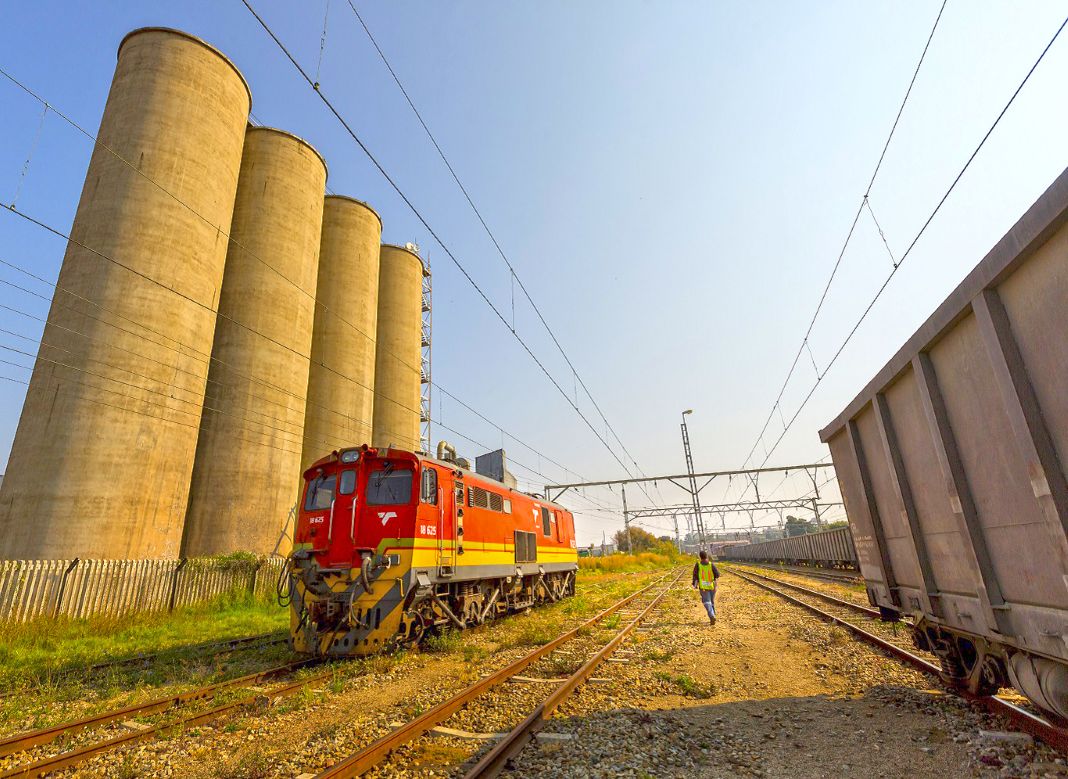
We are expected to adopt a long-term financial resilience and sustainability strategy, including the need to drive a balanced and sustainable funding model. Our appetite is to fund most programmes on an off-balance-sheet funding model. However, we are open to various forms of funding and our appetite to partner is not limited to public transport. Freight logistics urgently needs more weigh bridges, and we are actively looking into reactivating rail sidings that could move cargo within the province.
How would you describe your leadership style?
I’m a strategic, transformational and ethical leader. I’m a coach and mentor. I lead with integrity and by building trust through transparency, inclusion and cohesion. While I’m very consultative, basically most of my decisions rely on data-driven analysis. I’m also equally bold and very decisive. I strongly believe in communication, communication, communication, both structured and unstructured.
Unstructured ways of communication are where your innovative thinking juices flow.
I believe that these bring out the best in people in terms of being innovative and in as far as critical thinking is concerned. And I also believe in impactful outcomes or deliverables that
seek to respond positively to societal challenges.
Your education and background is in the built environment. Does that give you an additional understanding of the logistics and transport sector?
My academic background and professional development has provided me with a strong understanding of challenges, not only in the transport sector, but across the engineering fraternity.
The transport sector is interrelated to social aspects, including spatial arrangements, bulk infrastructure and it relies heavily on technology. The country’s economic prosperity is largely dependent on a well-structured, efficient, reliable and resilient transport system and its related infrastructure.
I’m well equipped with regard to systems-level thinking and change theories, allowing me to fully comprehend the interconnectedness of transport planning, technology and sustainability.
Did studying for an MBA give you any extra insights?
I must give credit and acknowledge GIBS for its impactful MBA programme – and I want you to bold it in the article – their commitment to personal development and therefore in crafting and shaping the executive that I am today.
A key takeaway from my MBA journey was the understanding of various theories and applying them. This has enabled me to analyse situations, frame concepts and synthesise complex information into clear, practical objectives and objective strategies and actions. With the help of the MBA, I’m also able to balance between my technical experience, governance and financial acumen, while responding to organisational performance expectations.
You mentioned sustainability earlier. How important is it in TAG’s objectives?
Sustainability is very central to TAG’s planning scenarios, which are anchored in the authority’s vision. The Integrated Transport Management Plan (ITMP) prioritises sustainability and non-motorised transport, particularly in urban areas, while taking into account the impacts of climate change. It further advances strategies aimed at reducing the need to travel. We should adopt travel-demand-management initiatives that encourage modal shifts.
One of the catalytic interventions in the strategic transport plan is to advance mainstream sustainable transport in Gauteng by adopting environmental approaches and by embracing
triple-access planning (physical mobility, digital connectivity and spatial proximity) to achieve equity and zero greenhouse gas emissions.
Has TAG had any notable successes?
As much as this is a fairly young entity, we are expected to perform like any other state entity. The entity has performed well, having achieved a clean audit and achieved all its indicators in the annual performance plan.
Our staff comprises highly skilled people who are tried and tested and who previously held key positions elsewhere. We are poised for performance. Four projects have already been achieved. TAG has:
- concluded the provincial land-transport framework, which provides the overarching policy and planning framework to guide integrated transport planning.
- finalised the Integrated Transport Masterplan 25, establishing a long-term integrated vision for transport infrastructure and services in the province.
- got to the final stage on the Strategic Transport Plan, which will set out a province-wide strategic framework to coordinate all transport-investment integration and implementation.
- developed the integrated fare management and the transport management centre (TMC), which will enable a coordinated, user-focused approach to public transport.
What do you want Gauteng people to know about the TAG?
There’s a feeling from members of the public about government not delivering on most of its mandate. But as an authority, we are saying, “We are here and we are here to listen.”
We are here to hold hands with members of the public to work together to transform the transport landscape within the province of Gauteng. We know that this is what the community has been yearning for.
They’re yearning for a quality transport system. They are aiming for a decongested and decarbonised transport system and for fewer fatalities on the road. A quality, efficient, reliable and safe transport system. And we are here to ensure that that is provided.
We are open for business. We want to work with those who are interested and want to see transformation of the system. As the pioneer, we are hopeful that this will then replicate to
other provinces and make our country prosper.
 Biography
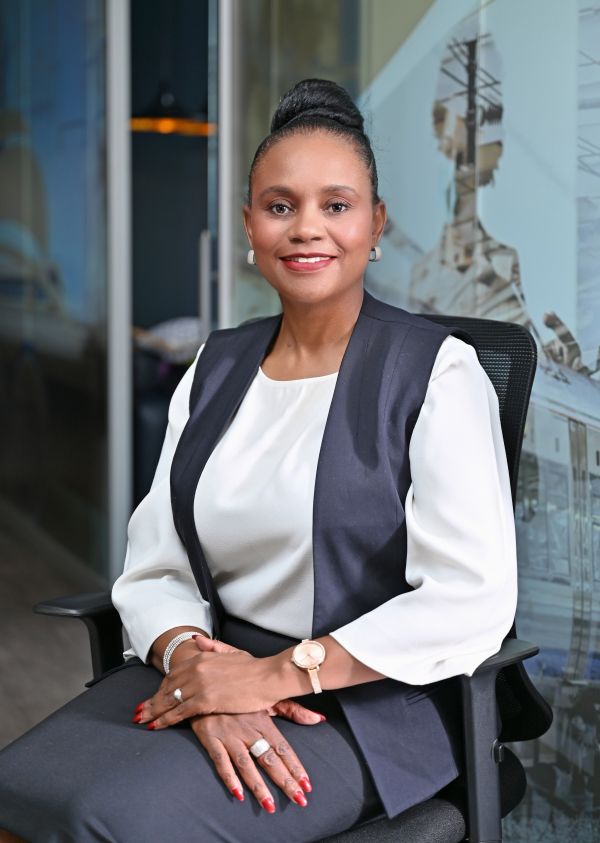
Dorothy Batenegi Mabuza (Pr Eng Tech) has over 27 years of expertise across water, transportation and public-sector development. Renowned for her capacity to lead strategic transformation within complex environments, she integrates engineering proficiency
with executive leadership.
In her previous capacities as Executive Director of Transport for the City of Johannesburg and Head of the Integrated Rapid Public Transport Network for the City of Ekurhuleni, she drove the advancement of significant transportation initiatives.
Her career in civil engineering, encompassing roles with Rand Water and Amatola Water, has provided her with extensive technical acumen in planning, design, project management and environmental sustainability. Her experience includes managing multi-billion-rand budgets, negotiating executive contracts and leading multidisciplinary teams.