


No world-class city thrives with a hollow centre. For cities to remain sustainable over time, economic activity, public life, and institutional presence must be concentrated and visible.
Cape Town’s second CBD is already demonstrating these qualities. Bellville carries the infrastructure, connectivity, and institutional anchors of a functioning city centre. Its transport systems operate at scale. Its universities, hospitals, and employers generate daily movement, skills, and economic activity.
What strengthens cities like this further, around the world, is a concentrated and visible government presence. When government locates itself within an already active centre, it reinforces permanence, stability, and confidence. It deepens footfall, supports safety, and gives long-term purpose to existing investment.
Every successful city has gravity. A daily pull created by people who arrive, stay, work, spend, move, and make decisions. In most global cities, the most reliable generator of that gravity is government. Where government locates itself, stability follows.
Government departments sign long leases. They employ thousands of people. They operate every day. Their presence creates consistency, predictability, and demand. If Bellville is to shift from a place in transition to a place of permanence, it requires institutional gravity of this magnitude. That gravity comes from national, provincial, and municipal departments choosing Bellville as an operational home. This is why 2026 should be the year Bellville becomes Government City.
Cities do not succeed only because they function. They succeed because people want to be in them. Clean streets, cared-for public spaces, visible maintenance, and a sense of order are not cosmetic upgrades. They are foundational infrastructure.
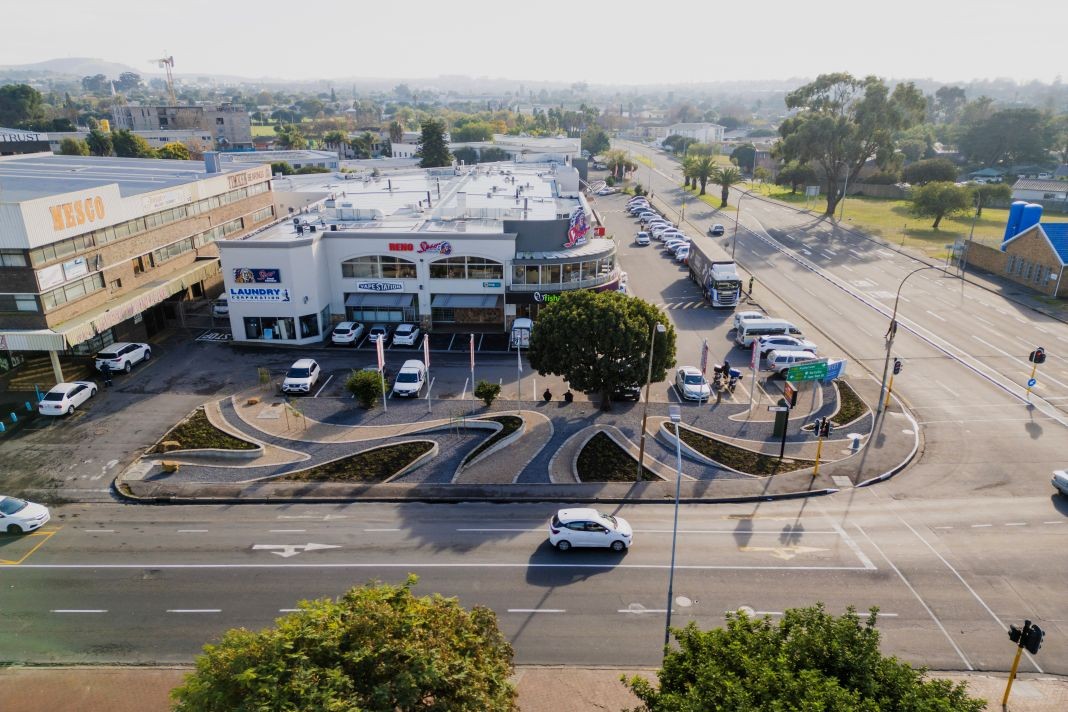
None of this holds without safety. Safety is the floor beneath every urban ambition. Bellville has made meaningful progress in recent years, particularly through the work of the Voortrekker Road Corridor Improvement District. But safety is never a completed task. It must be reinforced continuously.
A concentrated government presence strengthens safety in ways policy alone cannot. Thousands of people arriving daily to do their jobs change the rhythm of a place. Footfall increases. Oversight becomes constant. Streets shift from being intermittently used to being continuously observed.
Cities do not succeed only because they function. They succeed because people want to be in them. Clean streets, cared-for public spaces, visible maintenance, and a sense of order are not cosmetic upgrades. They are foundational infrastructure.
Bellville is already one of the most connected nodes in the Western Cape. Rail is returning. Bus services are improving. Taxis operate at scale. Transport investment is real, and it matters.
The area also hosts a rare concentration of institutional anchors. Universities, business schools, hospitals, and major employers operate here every day. These are not theoretical assets. They generate footfall, skills, research, and long-term investment. What is missing is the deliberate decision to layer government on top of these existing anchors.

Government functions create destinations. They give transport purpose and predictability. This is not about symbolic offices or satellite desks. It is about relocating real work, real authority, and real people. Departments responsible for housing, public works, transport, education, health, and social development should not be scattered across the metropolitan area. They should be clustered visibly, intentionally, and at scale.
There has been a noticeable improvement in tone and coordination at national level, and that deserves recognition. But cities are not transformed by tone alone. They are transformed by occupation. Occupation means desks filled, elevators running, cafés serving lunch, and trains full in the morning and evening.
Occupation is what gives cities life. A Bellville Government City does not require every department in the Cape Town region to relocate. It requires enough of them to create density, interaction, and confidence. It requires permanence, not pilots.
Bellville offers affordability, access, space, and institutional density. It offers government the opportunity to lead spatial transformation through presence, not policy documents.
Partnerships can support this work, but they cannot replace decisions. Government City requires a clear signal from national, provincial, and municipal leadership that Bellville matters now. Cities rarely fail because they lack plans. They fail because they lack conviction.
Bellville does not need more studies describing its potential. It needs people, presence, and daily life at scale. 2026 is the moment to move from transition to permanence.
Bellville is ready. The remaining question is whether leadership will choose it.
Justin Coetzee is an engineer and entrepreneur with more than 15 years’ experience in urban infrastructure, transport systems, and city-scale innovation across South Africa and internationally.
He serves as Chairman of the Greater Tygerberg Partnership (GTP), where he helps guide the long-term regeneration and repositioning of Bellville as a resilient, multi-anchor metropolitan hub.
Coetzee is also the founder and CEO of GoMetro, a transport technology company working with cities, governments and fleet operators to improve mobility, safety and economic performance.