
The Northern Cape province is ideally positioned to serve as the next economic and industrial growth node for South Africa, with compelling investment opportunities for global investors.
This is according to the Northern Cape Premier, Dr Zamani Saul, the Northern Cape MEC for Finance, Economic Development and Tourism, Venus Lorato Blennies-Magage, and CEO of the National Business Initiative (NBI), Shameela Soobramoney, who were addressing a stakeholders’ collaboration session in Sandton this month.
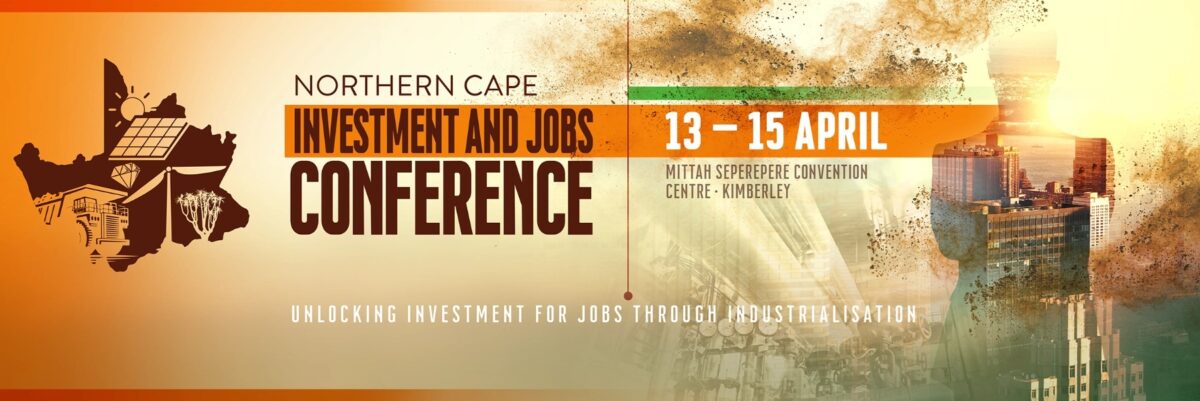
The workshop paves the way for the upcoming Northern Cape Investment and Jobs Conference 2026, which will be hosted in Kimberley from 13–15 April.
Six pillars of opportunity
Dr Saul outlined several key opportunities driving investors to the Northern Cape.
“Our investment offer rests on six pillars: green energy, minerals and mining, agriculture, industrialisation, infrastructure and logistics, and tourism,” he said.

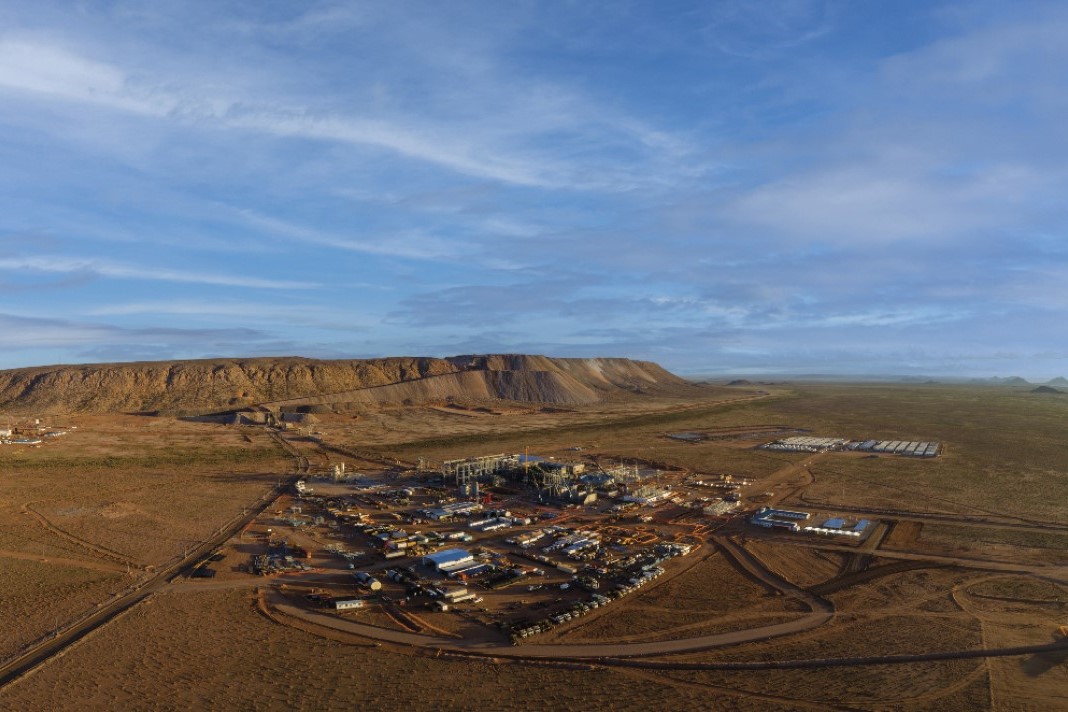
“In mining, the Northern Cape is home to the world’s largest known manganese resource and a leading exporter of diamonds, iron ore and zinc. We are now moving up the value chain to a new greener smelting capacity for zinc, manganese, iron ore, copper and lime. Key investors are already deeply invested in the Northern Cape.”
In agriculture, the Premier noted that the Northern Cape serves as a local and regional food basket for SADC and during the northern hemisphere winter, the Vaal and the Orange Rivers, together with the Vanerkloof and Vaalharts irrigation schemes underpin high quality food production for Europe.
He said: “We produce top grade venison, mutton and beef. We are also competitive in special tea crops, dates, pecans and raisins are internationally recognised, while our brandies, gins and wines are steadily building their export footprint.”
“On renewable energy, the fundamentals are compelling: with solar capacity factors of around 26% and wind at 37% the province offers performance metrics that continue to attract independent power producers and energy investors from around the world, with early analysis indicating the potential of roughly 11,400GW of solar power and 846 GW of wind power. This resource base supports the development of a large scale green hydrogen and derivatives industry,” Dr Saul said.
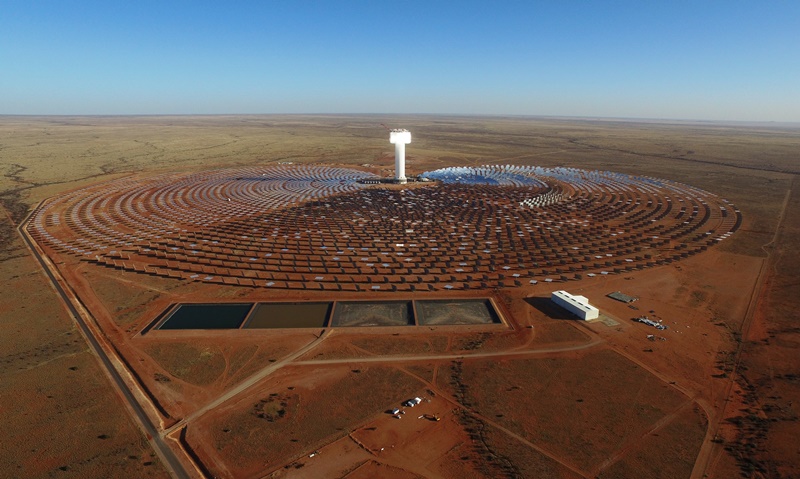
“The province is already central to the country’s independent power producer landscape – roughly 60% of all South Africa’s IPPS are based in the Northern Cape, giving the province a critical role in transforming the national grid under the new integrated resource and transmission development plan.”
The Northern Cape is also deeply connected to the rest of the region. Its railroad and power corridors link into industrial hubs across South Africa and into neighbouring countries, creating the basis for cross-border value chains, he said.
He also highlighted the Boegoebaai Port Development – a major R122.9-illion greenfield project to create a deep-water port, rail link, and green hydrogen hub connected to an industrial corridor across the province.
Powering SA’s energy transition
The NBI’s Soobramoney noted: “The Northern Cape is uniquely positioned to power South Africa’s energy transition. The province is also endowed with an abundance of critical minerals – particularly manganese and rare earth elements which are essential for the technologies that will define the global energy transition – from batteries and electric vehicles to renewable energy systems and advanced manufacturing.
“When we combine these resources with the province’s strategic focus on value addition, beneficiation, logistics and industrial development, we begin to see a powerful opportunity emerging: the Northern Cape as a hub for green industrialisation and regional economic growth.”
Power partnerships for growth
However, she emphasized: “South Africa’s transition will not be delivered by the government alone. It will require strong partnerships with the public sector, businesses that are willing to invest, innovate, collaborate and scale solutions that support sustainable growth. Alongside that will be the inclusive nature of the communities around that, who we want to benefit from this new growth trajectory. If we get this right the opportunities are immense – not just for the Northern Cape, but for South Africa as a whole.
“We can build new industries, strengthen value chains, create jobs and position South Africa as a competitive player in the global economy, but this will only happen through collaboration between business, government, investors and the local community.”
South Africa’s transition will not be delivered by the government alone. It will require strong partnerships with the public sector, businesses that are willing to invest, innovate, collaborate and scale solutions that support sustainable growth.
The Northern Cape MEC for Finance, Economic Development and Tourism, Lerato Venus Blennies-Magage said: “The upcoming Northern Cape Investment and Jobs Conference will serve as a catalytic moment to align government, business and development partners around a shared programme to unlock large scale investment, accelerate industrial development and to drive sustainable job creation for the province of the Northern Cape.
For many years, the Northern Cape has been described through the language of distance and vastness. However, in a rapidly changing global economy, these very characteristics are being redefined as strategic advantages. The province is increasingly positioned at the centre of emerging economic shifts, particularly in relation to the global energy transition, critical minerals and the large-scale industrial development.”
Global shifts favour Northern Cape
Dr Saul agreed: “Three global shifts are now working in the favour of the Northern Cape: first, global trade and supply chains are being redesigned. Countries and companies are searching for more secure, diversified routes to move raw materials and finished goods efficiently. The Northern Cape’s position makes it a natural logistics and export hub for the whole of Africa. Second, the global energy transition is accelerating, net zero commitments and decarbonisation strategies are driving massive expansion in renewable energy. The Northern Cape has some of the best solar and wind resources anywhere in the world. This is not just an environmental advantage, it is also a cost advantage.
“Third, the demand for critical minerals is rising sharply, with demand for manganese, copper, zinc and other strategic minerals. The Northern Cape holds globally significant deposits of these minerals and is well positioned to become a dependable, long-term supplier to global manufacturing value chains.”
The Northern Cape’s position makes it a natural logistics and export hub for the whole of Africa.
He said: “The province’s competitive advantage lies in the combination of these strengths. Our intention is to expand South Africa’s economic footprint – not merely to shift activities from one province to another.”
The Northern Cape Investment and Jobs Conference will be held from 13 – 15 April 2026 at the Mittah Seperepere International Convention Centre (MSICC) in Kimberley.
For more information, visit https://ncijc.org.za/