

By John Young
Donald Trump’s presidency has created great uncertainty in the world. South Africa suffered its share of tariff second-guessing but there were other major changes that happened within the national economy that were not related to a return to protectionism by the world’s biggest economy. Two business brands that dominated the South African economic landscape of the 20th century almost disappeared in 2025 but there are signs that new sectors, most notably renewable energy, will step up to create opportunities.
Both Anglo American and Murray & Roberts began life in the early years of the century and played big roles in the industrialisation of the Union of South Africa (from 1910) and the Republic of South Africa (after 1961). Anglo diversified beyond its initial foray into mining into every conceivable part of the national economy, to the extent that in the 1970s its subsidiaries accounted for about 60% of the value of the Johannesburg Stock Exchange (JSE).
After turning back to mining as the century reached an end, Anglo American has more recently sought to intensify its focus still further, even going so far as to sell its stake in De Beers Group, proving that diamonds are not, in reality, forever, at least not as an asset class. In 2025, a merger with Canadian company Teck Resources was announced. The resulting Anglo Teck expects to be a global top-five copper producer, with headquarters in Canada and listings on the LSE, JSE, TSX and NYSE4. Anglo’s significant holdings in iron ore in South Africa will remain as an important part of the merged company.
After an initial focus on construction, Murray & Roberts grew into a large engineering group with multiple divisions and subsidiaries in Australia, the US and South America. A business rescue plan has been implemented to save the various subsidiaries of Murray & Roberts Holdings, with the major mining asset being acquired by the Differential Capital consortium and rebranded as Cementation Africa. Engineering and contracted services to the mining sector are this company’s main business.
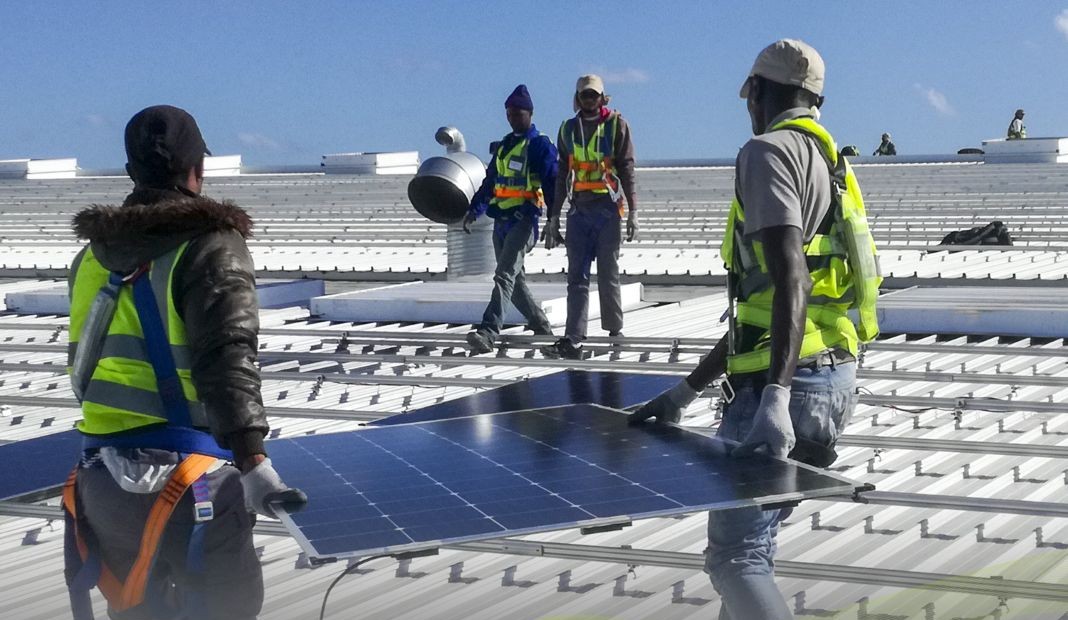
As of June 2025, South Africa’s plan to invite investors to create renewable-energy plants, the Renewable Energy Independent Power Producer Procurement Programme (REIPPPP) had attracted R292-billion in investment across 111 wind and solar farms with a generation capacity of 8 000MW, with a further 3 000MW from 21 approved investments closing in on finalisation (Engineering News). All across South Africa, solar panels are being installed on roofs of shopping malls and factories and “wheeling” is proving tremendously popular.
Wheeling allows independent power producers (IPPs) to sell energy to mines or other big energy users and “wheel” the power along the national grid. The transaction is a book entry rather than actual electrons being exchanged. A dedicated company, the National Transmission Company South Africa (NTCSA), has been formed to facilitate access to the grid and although it is a subsidiary of national utility Eskom, is supposed to act independently.
The great challenge facing the nation’s energy planners now relates to grid capacity, a problem that is facing many parts of the world, especially in places where extraordinary demands are being made by data centres hungry for power. South Africa’s particular challenge is to beef up the grid in provinces that have the best potential for solar power (Northern Cape) and wind power (Eastern Cape). Wind at a greater height has been found as one solution in Mpumalanga where Seriti Green is building the 900MW Ummbila Emoyeni hybrid renewable-energy facility, which will become the largest of its kind in South Africa.
The most significant step to strengthening the grid is in the direction of public-private
partnership with national government announcing an Independent Transmission Projects Programme (ITPP), which mirrors the REIPPPP. Operated by the Department of Electricity and Energy (DEE) and National Treasury, the scheme includes a Credit Guarantee Vehicle.
President Cyril Ramaphosa remained president of South Africa after the elections of 29 May 2024, but only with the support of a coalition of 10 political parties which has been called a Government of National Unity (GNU). As of November 2025, the coalition was holding, although with signs of tension quite evident along the way.
Representing 70% of the voters who turned out for the election, the new government covers a wide spectrum of political standpoints and crucially contains parties that are committed to the country’s constitution and to the rule of law.
In the National Assembly elections for the position of president, Ramaphosa received 86.5% of the votes of Members of Parliament.
The African National Congress (ANC), which was seen as the party of liberation and had been the governing party since the first democratic election of 1994, saw its vote share drop in 2024 to just over 40%, having garnered more than 57% in 2019. While the ANC historically has a socialist orientation, the largest other party in the coalition, the Democratic Alliance (DA), is inclined to argue for minimal government intervention in the economy. As the DA’s website states, “Government must always stand ready to help those who need it, but its primary function is to empower the people to make use of their freedoms, so that they may progress in their own lives.”
Marrying these two views on economics presented some difficulties as the government set out in 2024, but if the focus remains on fixing, maintaining and building infrastructure, then the chances of continuing as a governing coalition will remain strong.
The spirit of cooperation which created the GNU has also been evident in the business community, where an initiative of many of the country’s chief executive officers is supporting state entities in tackling infrastructure problems. There have been good signs of progress regarding electricity availability, port logjams being cleared and security improvements on important rail links.
Transnet Port Terminals (TPT) hired 200 additional cargo coordinators and port workers
to support citrus exports in the 2024 reefer season. Citrus exports account for more than 50% of agricultural exports and contribute R43-billion to South Africa’s GDP. Volumes increased by 10% year-on-year for the first six weeks of the 2024/25 financial year, a year in which TPT will spend R3.9-billion on new equipment.
Global stage
In 2023, South Africa hosted the BRICS Summit. As of 1 December 2024, South Africa held the presidency of the G20, becoming the third BRICS nation in a row to hold that position after India and Brazil.
In November 2025, President Ramaphosa welcomed many of the world’s most influential
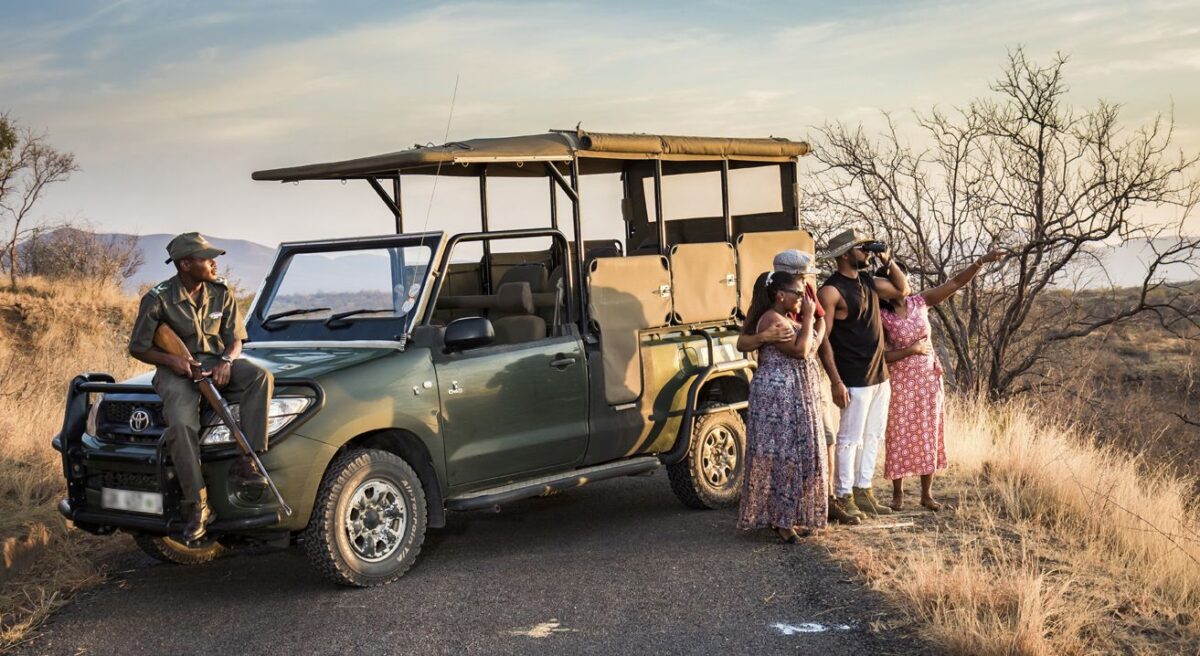
leaders to the G20 Summit, an unprecedented opportunity to raise the country’s profile. In the days leading up to the summit, Ramaphosa met with the Pope in Rome and a number of events were held related to the event. Business leaders (the B20) met on various topics in several parts of South Africa and an agriculture-related meeting was held in Limpopo, a tourism-related meeting was hosted in the Kruger National Park in Mpumalanga while finance ministers and central bank governors met in Durban.
South Africa has burnished its reputation for hosting global events through the FIFA World
Cup, the World Conference against Racism, COP17 and various other conferences that have been well run. South Africa adopted as the theme for its G20 Presidency “Solidarity, Equality and Sustainable Development”.
As President Ramaphosa told a G20 meeting under Brazil’s presidency that with just a short
time before the deadline date of the UN 2030 Agenda for Sustainable Development, it would make sense to have a tight focus on the programme of Sustainable Development Goals (SDGs) in the years leading up to 2030. According to Ramaphosa, just 12% of SDGs are on target and progress on 50% is “weak and insufficient”.
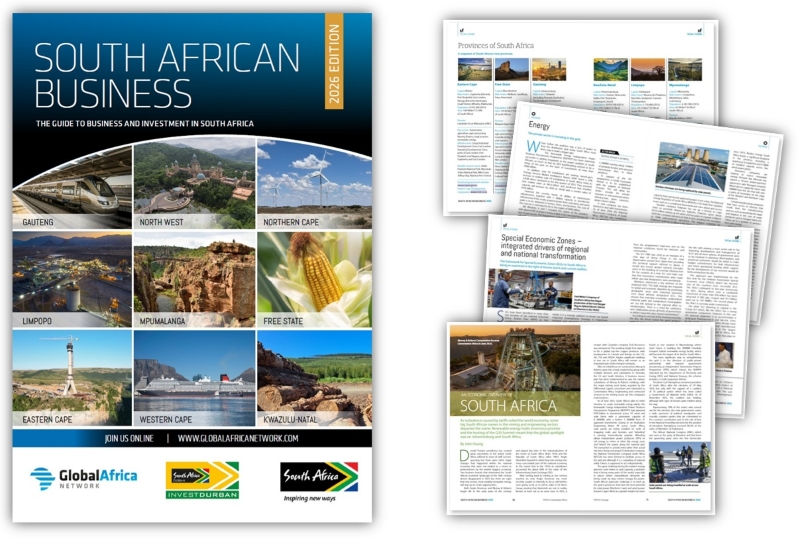
The 2026 edition of the South African Business journal is now available: