
Gauteng: Africa’s mining innovation capital
Investing in African Mining Indaba, Wednesday 11 February 2026
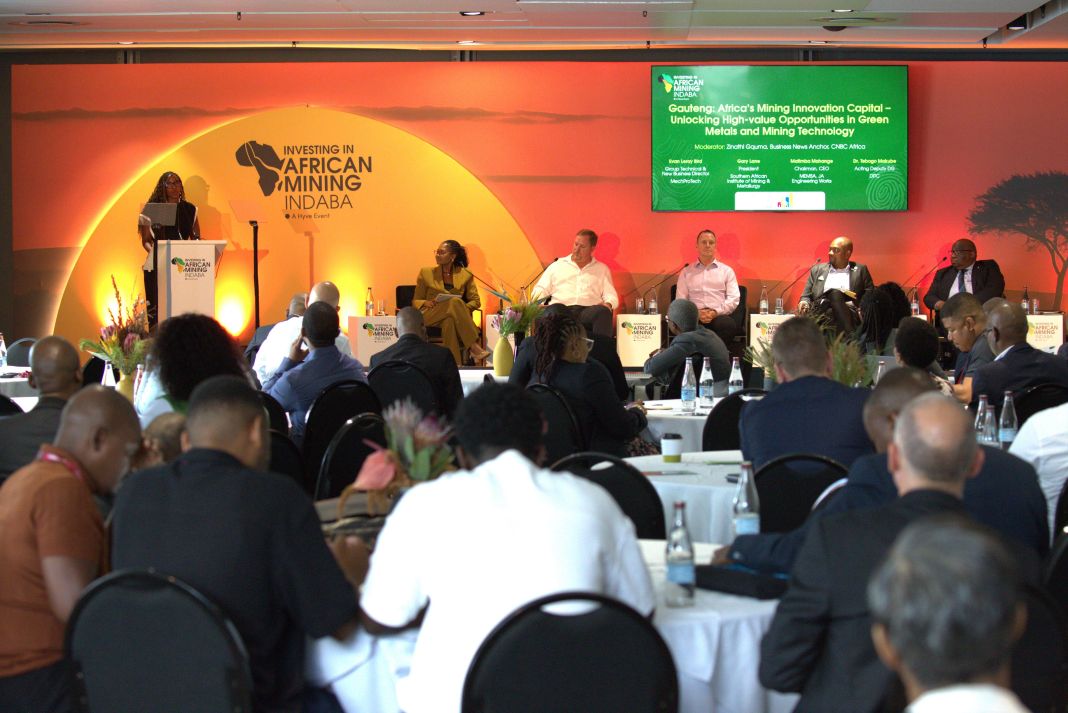
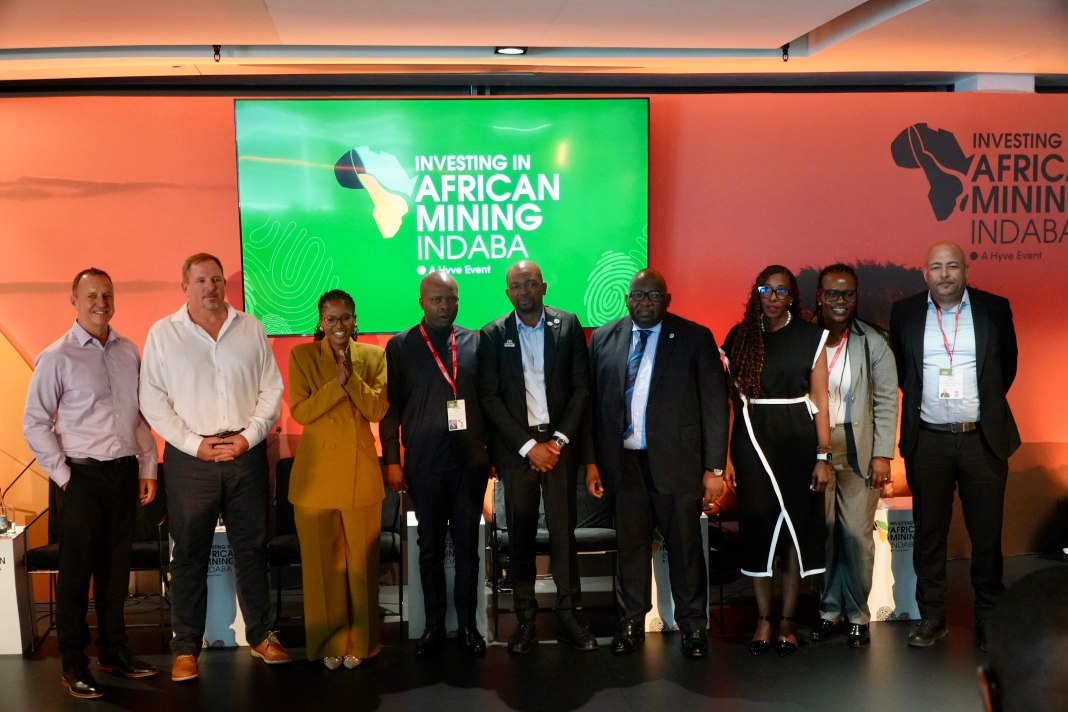
The event was facilitated and the discussion led by Zinathi Gquma, the Business News Anchor at CNBC Africa. The introductory remarks were made by Lebogang Maile, MEC, Gauteng Department of Finance and Economic Development and the summing up was provided by Maidei Matika, the Chief Investment Facilitator of the OR Tambo Special Economic Zone.
The panellists were Dr Tebogo Makube, Acting Deputy Director General: Sectors Branch, Department of Trade, Industry and Competition; Evan Bird, Group Technical and New Business Director, MECHPROTECH; Matimba Mahange, Chairman of Mining Equipment Manufacturers of South Africa (MEMSA) and CEO of JA Engineering Works; Gary Lane, President of the Southern African Institute of Mining and Metallurgy (SAIMM).
Gauteng: Africa’s mining innovation capital
Unlocking high-value opportunities in green metals and mining technology.
The great opportunities presented by global demand for critical minerals represent an unparalleled opportunity for Gauteng, but real collaboration across the board will be needed for the province to realise all of the potential benefits.
This was the key takeaway from a high-level panel discussion presented by the Gauteng Growth and Development Agency (GGDA) at the Investing in African Mining Indaba on 11 February 2026.
The good news is that Gauteng’s storied history in mining, strong infrastructure and excellent educational institutions, together with Gauteng’s role as the nation’s economic hub all position the province to take the lead as Africa’s “Mining Innovation Capital”.
Beyond extraction
MEC Lebogang Maile referenced the past and the future in his opening address. Although Gauteng was built as a “Place of Gold”, he said that the story has moved beyond extraction. He said, “It is about where value is created, where capital is anchored, where technology is applied and where the future of mineral-based industrialisation is taking shape.”
Dr Tebogo Makube, Acting Deputy Director General: Sectors Branch, Department of Trade, Industry and Competition made a similar point when he stressed that mining itself was less important than the fact of value addition.
In response to an early question about whether or not South Africa was ready or aligned with the coming changes in the mining environment Gary Lane, President of the Southern African Institute of Mining and Metallurgy (SAIMM), gave a short answer, “No”. He stressed the importance of training and education being aligned with the future of mining and urged collaboration among all role players, a subject on which all panellists contributed as the session progressed.
Referencing the “massive opportunity” offered by critical minerals in Africa, he warned that multinationals would benefit instead of Africans “if we don’t start collaborating”.
Matimba Mahange, Chairman of Mining Equipment Manufacturers of South Africa (MEMSA) and CEO of JA Engineering Works, referenced some of the incredible innovations which South Africans have been responsible for such as heart transplants and the technology which drives SASOL. He noted that among MEMSA’s 70 members there were “great companies that do wonderful stuff” and most are exporting equipment, the CSIR is promoting industrialisation and there is cutting-edge technology such as industrial uses for hydropower are being employed in some sectors.
Lane acknowledged the great historical examples and that South Africa has “incredible engineers and incredible innovation” but expressed concern that the country’s skills were being poached.
To emphasise the point about the Gauteng mining story moving beyond extraction, Maidei Matika, the Chief Investment Facilitator of the OR Tambo Special Economic Zone, mentioned in her closing remarks that for decades Belgium had set diamond prices and London had set gold prices despite neither location every having mined anything!
She said that the OR Tambo SEZ was examining how to create the most efficient ecosystem that allowed the economy to grow. She commented, “While extraction might have moved away from Gauteng, the value is still there.” She further noted that the value could drive jobs and provide a platform for investment.
Rich resources
The global context was provided by MEC Maile (pictured below), who quoted a World Economic Forum White Paper: “Demand for critical raw materials is rising because they are needed for clean-energy technologies, and current projections suggest that demand may soon exceed supply.”
Electric vehicles, batteries, renewable-energy systems and power grids all need critical minerals and, according to MEC Maile, Gauteng is well placed to play a “central role”. Said Maile, “South Africa has significant reserves of platinum group metals, manganese, chrome, vanadium and gold. Between 2020 and 2024, the country exported R3.9-trillion in mineral commodities, with Gauteng accounting for most of the value in PGMs, manganese, chrome and coal exports.”
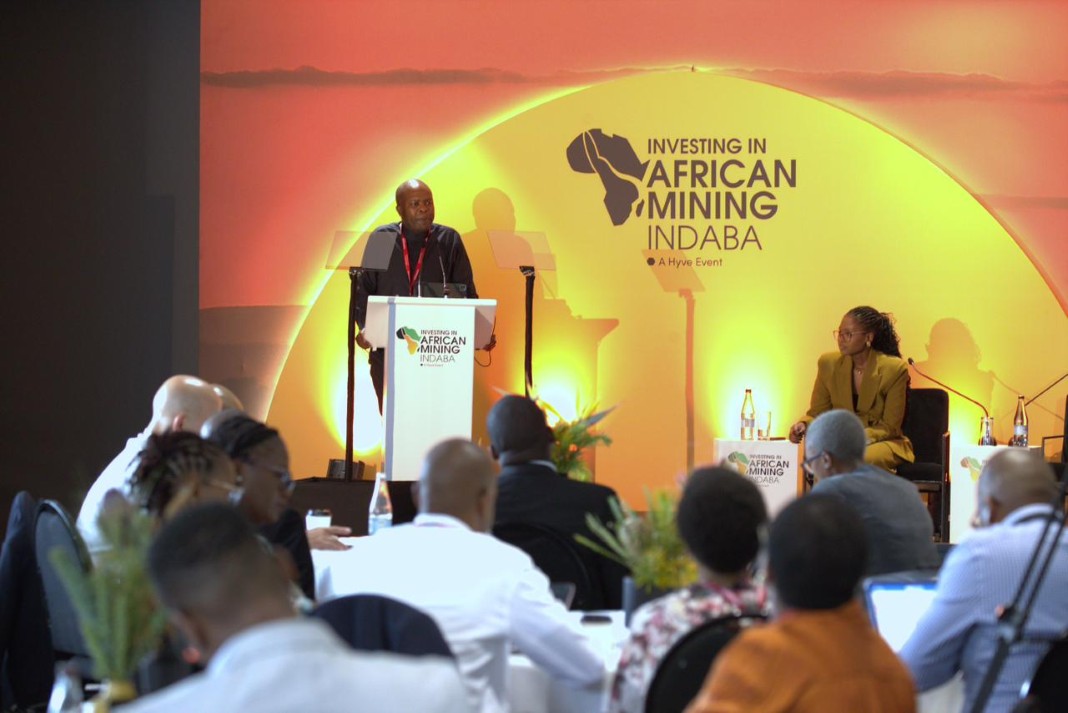
Dr Tebogo Makube, Acting Deputy Director General: Sectors Branch, Department of Trade, Industry and Competition, commented that for Gauteng and South Africa this period of demand for critical minerals was an “opportune time” but that it could be a blessing or a curse. Policy would be needed to ensure that investment is directed to areas which are critical for innovation and economic growth.
The skills equation
“The mine of the future needs very diverse skills,” said Gary Lane. He continued, “We need to make sure that tertiary programmes align with what the industry of the future needs.”
Although some of the panellists suggested that South Africa had proved in the past that it could come up with the skills required to complete complex tasks (hosting the soccer World Cup was referenced in addition to the medical and SASOL examples) all participants agreed on the importance of skills for the mining sector and on the need for there to be collaboration on this topic.
Lane argued that the traditional pipeline that provided relevant skills to the mining sector “is not working” and that there was a need to “reestablish the system that is broken”. Referencing a “skills mismatch”, he said that the right people needed to be attracted and that courses needed to be “aligned with the needs”.
The positive side of the equation Lane expressed like this: “We know this. We can do something about it.” For SAIMM, “That is one of our key focus areas, the mine of the future must have the skills required.”
Referring to his own experiences as a young engineer, Mahange said that a “missing link” today was the big mining companies giving people experience on the job. He had seen highly qualified engineers in Germany working on production lines, not occupying big corner offices. It was important to marry the classroom and the practical side, he said. Coordination was needed to train people in different skills and this is something that MEMSA was trying to do. People within the industry are well placed to train people and it was a matter of “properly directed and distributed” funds to make sure that this happens.
The headquarters of many companies in the mining sector and supporting sectors are located in Gauteng. These include finance houses, mining companies and equipment manufacturers along with law firms, engineering and ICT services.
Evan Bird, Group Technical and New Business Director, MECHPROTECH, noted that from a skills perspective, mining faced a particular challenge in “that we are in a global space” where graduates could freely move around. He praised South Africa’s innovative culture and reinforced Mahange’s point about marrying education and experience. Noting that education was only one aspect of becoming an mature engineer, he said, “You have got to get these guys with all their energy and innovation knowledge, then through action, they will get wisdom in the future.”
Infrastructure is key
The industrial infrastructure that Gauteng and South Africa enjoys today was built by mining, a point noted by Mahange, who went on to state that Gauteng was well positioned to drive further growth.
The facilitator posed an insightful rhetorical question when she asked, “Was infrastructure originally built for regional integration?” The answer in colonial times was obviously not, but Lane noted that recent investments had also been about mining companies getting “their product out”.
Lane warned that without collaboration between mining houses, OEMs, government and regulators, “We are not going to harness the value” and it would be multinationals who would benefit.
MEC Maile pointed out that Gauteng had attracted about R12.8-billion in mining-related investment over the last five years, positioning Gauteng as a regional industrial hub and as a province “supporting cross-border mineral value chains under SADC and AfCFTA, rather than competing with extraction-focused provinces or neighbouring countries”.
The headquarters of many companies in the mining sector and supporting sectors are located in Gauteng. These include finance houses, mining companies and equipment manufacturers along with law firms, engineering and ICT services.
Policy progress
“The Critical Minerals Strategy is the roadmap of where we want to go,” stated Dr Makube of the dtic. He noted that policy was not static and that government has moved in recent times. The Industrial Policy Plan of the dtic is anchored on three “Ds”:
- Decarbonsiation
- Diversification
- Digital economy.
From the viewpoint of the Gauteng Provincial Government, MEC Maile noted that value is realised where processing, manufacturing, skills, technology, finance and logistics come together. “This is why,” he said, “Gauteng has focused on building both the upstream and downstream parts of the mining value chain as a key driver of economic growth.”
He went on to link the province’s policy to South Africa’s Critical Minerals and Metals Strategy, published in 2025. It notes that local processing and beneficiation of critical minerals could create up to 2.3-million jobs and boost Africa’s GDP by 12%, provided that problems related to infrastructure, energy and logistics are addressed.
Maile noted that this aligns with research that emphases the importance of regional integration, value-chain coordination and investment facilitation. This is how to translate mineral demand into sustainable development benefit.
Collaboration for success
Underpinning many of the inputs from the panel was the importance of collaboration for the mining sector in the future.
Lane made the point that mining houses, academics, funders, regulators and OEMs might all have different incentives, so it was important that there was ownership and drive. It was important to bring that fragmented ecosystem together to work as a proper system. He said that his organisation, SAIMM, is going to focus on that. “We need to walk our talk with tangible actions,” said Lane. “We can fix the pipelines.”
Mahange said that if industry clusters were properly resourced, they could do the work (of collaboration). “The development finance is there,” he said. “We have got to unlock those stumbling blocks.”
New models
Dr Makube of the dtic made a call to look at some aspects somewhat differently. Contextualisation is needed with regard to skills, for example. “We are dealing here with a changing world, and we have to respond to that,” he said.
There was a need to look at new models to develop the new skills required in the new economy. “Partnerships are key to building skills for the future,” he said. He referenced the need to create partnerships in the making of batteries and asked, “Are we training people so that they can migrate to working on electric vehicles (EVs)?”
Dr Makube further noted that the dtic was not limiting itself to working on policy. It was assisting companies in the science and hydrogen space and is creating an EV White Paper. It was possible for government to support innovation, for example, he said, “We need to be creative as government where we can use offtake contracts to procure innovative products.”
Bird suggested that the new mining environment, especially where critical minerals were found in relatively small quantities in many locations, lends itself to what he said was needed, namely “a new way of thinking”.
Among the different concepts he put forward were the idea that “smaller, more modular systems” could lease equipment rather than buy it. These smaller units could then process the commodity and help to expand the mining community beyond the giant companies that traditionally mined with “big volumes and high turnover”. The financial sector would also have to be on board to make this method viable.
Conclusion
Gauteng’s strategy as regards mining is closely aligned to the South African Critical Minerals Strategy of 2025 where the focus is on “strengthening our industrial base and increasing value addition, we can create jobs, drive innovation, and advance economic growth”.
As MEC Maile reiterated at the end of his opening remarks,
The future of mining in Africa will not be shaped by extraction alone but by how we use mining to build integrated, high-value and resilient industrial economies across the continent.
Gauteng’s offering to investors is based on institutional depth and policy certainty; financial sophistication and technical capability; industrial platforms enabled through SEZs; and market access at scale, both regionally and globally.
Investing within Gauteng’s mining industry
The Gauteng Growth and Development Agency (GGDA) is committed to creating an inclusive and transformed Gauteng economy that attracts foreign and domestic direct investment, develops sustainable enterprises and strategic economic infrastructure, and enables the growth of exports to the continent and beyond.
Visit www.ggda.co.za or contact the team here: