
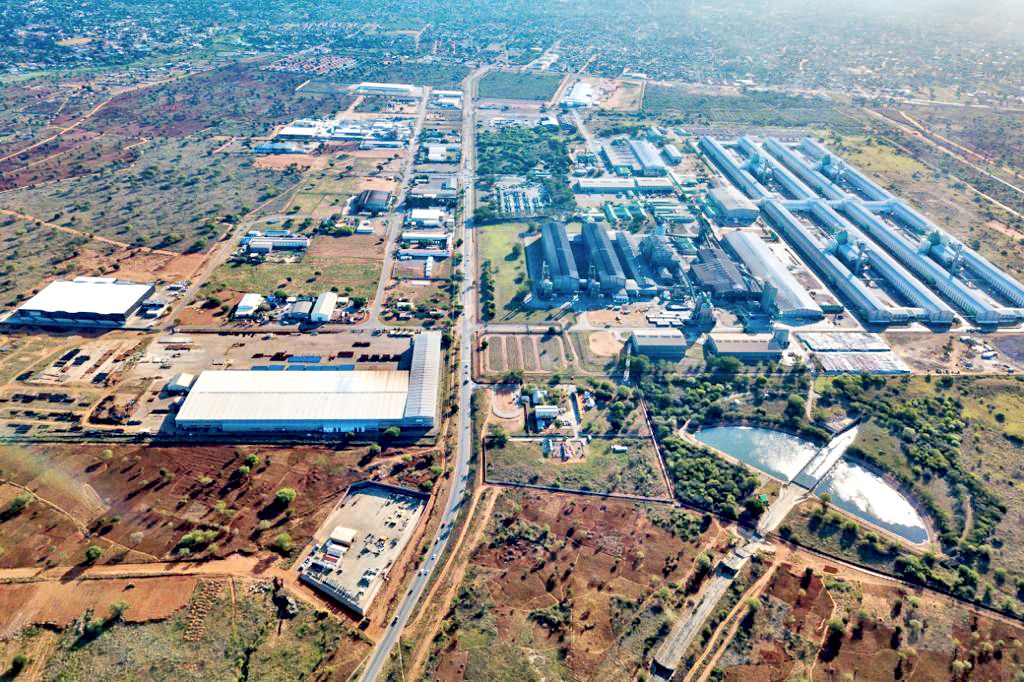
Various forms of Special Economic Zones (SEZs) exist across the African continent. These include Free Economic Zones, Export Processing Zones (EPZs) and Free Trade Zones (FTZs).
Such is the value attached to SEZs that a continental body, the African Economic Zones Organization (AEZO), represents and lobbies on behalf of the public and private institutions which run and promote SEZs in Africa.
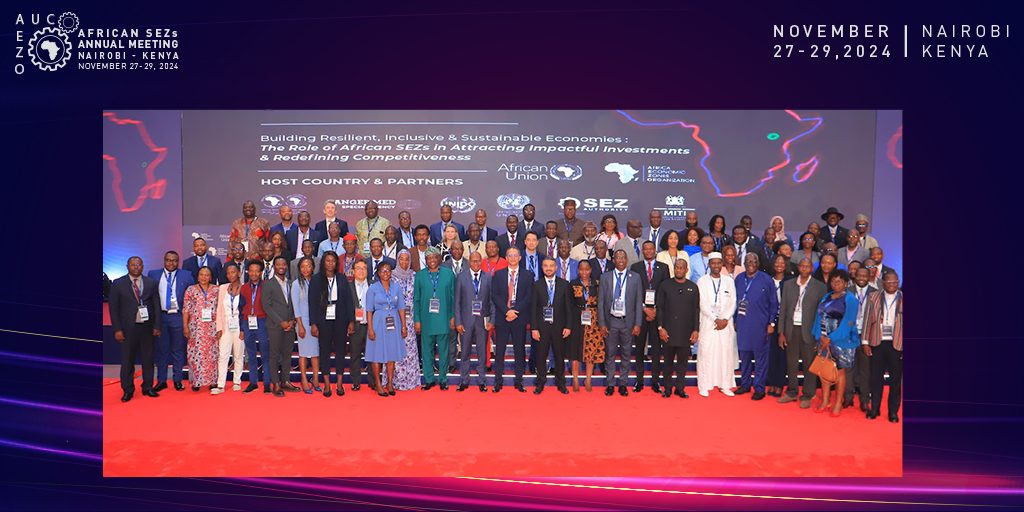
Founded in 2015, the AEZO is an important forum for information exchange. The body holds regional workshops and an annual meeting. The 2024 meeting was hosted by Kenya’s Special Economic Zones Authority (SEZA) and that country’s Ministry of Trade, Investments and Industry under the theme “Building resilient, inclusive and sustainable economies: the role of African SEZs in attracting impactful investments and redefining competitiveness.” More than 400 delegates gathered at the Kenyatta International Convention Centre (KICC) in Nairobi to share ideas.
The AEZO reported in 2021 that Africa had about 203 active SEZs with another 73 in development.
SEZA is an example of a national coordinating body for SEZs. Others on the continent include the Nigeria Economic Zones Association (NEZA), the Special Economic Zones Authority of Rwanda (SEZAR) and SEZA Botswana.
Kenya has no fewer than eight types of SEZ, ranging from ICT Parks and Science and Technology Parks to Free Trade Zones and a Free Port Zone. Some countries house their SEZ policy and promotion under national departments such as South Africa’s Department of Trade, Industry and Competition (the dtic), or as is the case in Ethiopia, with bodies such as the Ethiopian Investment Commission (EIC).
Botswana has or is planning nine SEZs. Each caters for the strengths of its specific location and aims to add value to raw products for export, another typical feature of the SEZ model. The Sir Seretse Khama International Airport Special Economic Zone obviously has an aviation focus, but also presents itself as a hub for diamond beneficiation. The others are Fairgrounds (finance and technology), Francistown (mixed use, mining and logistics), Greater Palapye (energy and beneficiation of coal), Lobatse (meat and leather), Pandamatenga and Tuli Block (agro-processing), Selebi Phikwe (mixed use) and Sowa Town (beneficiation of salt and soda, chemicals).
The AEZO reported in 2021 that Africa had about 203 active SEZs with another 73 in development. Zones are present in 47 of the continent’s 54 countries, with the largest number of zones in Morocco, Nigeria, Egypt, Ethiopia and Kenya.
Nearly 150 000 hectares is devoted to Special Economic Zones on the continent while over $2.6-billion in investments has been made into a wide variety of sectors such as agro-processing, manufacturing and services. With many SEZs being linked to ports, logistics is naturally a big sector for SEZs and a recent trend has seen the growth in investment in energy.
Some zones are specifically targeting energy production, and more specifically renewable energy. In Egypt, the Suez Canal Economic Zone (SCZONE) in 2022 signed a preliminary agreement with Indian company ReNEW Power for 220 000 tons of green hydrogen production, with an investment value of approximately $8-billion. This was the eighth such agreement that SCZONE has signed with the aim of localising and manufacturing green fuels. Some of the other partners include Maersk, Scatec and EDF Renewables.
African SEZs
The first African SEZ was launched in 1970 by Mauritius, and Ghana and Senegal followed with zones of their own by the end of the decade.
The merger in 2013 of the Kigali Free Trade Zone and Kigali Industrial Park in Rwanda led to the establishment of the Kigali Special Economic Zone (KSEZ). Since then, at least eight other zones or industrial parks have been successfully launched, including the Bugesera SEZ and facilities in the towns of Rwamagana, Muhanga, Nyagatare, Musanze, Huye, Nyabihu, Rusizi and Rubavu.
Both Rwanda and Mauritius were singularly successful in achieving the goals they set for their SEZs. Rwanda wanted to boost employment by producing goods for export. Within three years, 3% of its workforce was employed in the newly established SEZ while Mauritius succeeded spectacularly in processing and selling sugar to the EU, boosting both export income and employment (Inclusive Society Institute).
A feature of the Mauritian story was the fact that European processing companies led the process. The government leaned heavily on the private sector to achieve its national development goals and research supports the idea that the best model for ownership or management of SEZs is a combination of public and private.
Many ownership options are available, all the way from wholly government controlled to a licensing arrangement with a private entity. One option is for a private investor responsible for the establishment of the SEZ to be given a lease of a set number of years, after which the facility reverts to the government.
Nigeria celebrated three decades of the Special Economic Zones programme in 2022. The website of the Nigeria Export Processing Zones Authority (NEPZA) states that it has more than 40 “free zones” but under “active” free zones, eight are listed, including some with the name of a private corporation (Dangote Industries FZ) and others representing a major city such as Calabar Free Trade Zone (CFTZ). The Lagos Free Zone, connected to the Lekki Deep Sea Port and administered by Singapore-based Tolaram, and the Eko Atlantic Free Zone are among the best known of the West African country’s SEZs.
Government role
Government’s main roles are to provide legislative certainty and good infrastructure. Where both are present, SEZs are far more likely to succeed. A failure to provide adequate transport or power infrastructure will deter private investors, as will a legislative framework that changes every few years.
The other key government role is to determine the level of incentives available to investors in an SEZ.
Objectives of industrialisation, regional development and employment creation are typically cited as the goals of SEZ programmes. They can also contribute to businesses being created.
In Mozambique a mining company, Kenmare Moma Mining, has helped establish the MozParks Topuito Agro-Industrial Park in Nampula Province as an innovation centre to support startups in getting access to the value chain. MozParks, the other partner in the venture, is the developer and operator of agro-industrial parks.
As an AEZO newsletter noted with respect to SMEs: “In emerging markets, where they account for 90% of all firms and 50% of all jobs created, SMEs constitute the backbone of the global economy. The impact is greater in Africa, where SMEs employ almost 80% of the labour force on the continent. Although SMEs are a substantial economic force, there is still a lot of room for expansion.”
An Occasional Paper published by the Inclusive Society Institute in 2023, “Leveraging special economic zones for growth”, notes the fiercely competitive environment in which SEZs operate globally. Morocco’s successful policy is highlighted in this regard. Investors in any one of the country’s seven SEZs paid no corporate taxes for five years and pay reduced rates after that. Various other low rates of tax and generous exemptions are applied. Morocco’s exports are now valued at over $2-billion, with international aeronautics companies now manufacturing in the country for export.
Read more in The Journal of African Business: